



Leica
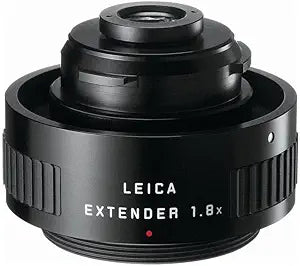
Leica 1.8X Extender for APO-Televid Spotting Scope
★★★★★
Boost your Leica APO-Televid spotting scope to 1.8x magnification with an achromatic doublet lens for sharp, color-accurate views.
$382.35*$474.00Save 19%
View on Amazon
✓ In Stock on Amazon.com
*Price sourced from Amazon.com. Last updated:Jun 27, 2026.Price and availability are subject to change.
Affiliate Disclosure: Studio Supplies may earn a commission from qualifying purchases made through links on this page, at no additional cost to you. This helps support our editorial team.
Notice a mistake? Let Us Know
Overview
Key Features
EXTENDED REACH - Increases your spotting scope's magnification by 1.8x, bringing distant subjects closer with exceptional clarity, ideal for detailed observation and analysis.
SUPERIOR COMPATIBILITY - Specifically designed for Leica APO-Televid 65mm and 82mm angled spotting scopes, ensuring a seamless fit and optimal optical performance.
ENHANCED DURABILITY - Comes with front and rear lens caps, protecting the lens from scratches, dust, and impacts, ensuring long-lasting performance in the field.
OPTIMIZED VIEWING - Features an achromatic doublet lens type, minimizing chromatic aberration and delivering sharp, high-contrast images for accurate subject identification.
PEACE OF MIND - Protected by Leica's 2-year limited warranty, safeguarding your investment against manufacturing defects and ensuring reliable performance for years.
Specifications
Brand
Leica
Model
41022
Magnification
1.8x
Lens Type
Achromatic Doublet
Compatibility
Leica APO-Televid 65 W, APO-Televid 82 W
Eyepiece Compatibility
Leica 25-50x WW ASPH Eyepiece
Attachment
Integrated Automatic Lock
Pros & Cons
👍 Pros
- Achromatic doublet lens maintains excellent color accuracy and sharpness at extended magnification
- Integrated automatic lock ensures a secure, tool-free connection that won't loosen during use
- Compact and lightweight design adds minimal bulk to your spotting scope setup
- Leica optical engineering delivers consistent edge-to-edge clarity across the field of view
👎 Cons
- Only compatible with Leica APO-Televid 65 W and 82 W angled scopes, limiting versatility across other brands or models
- The 1.8x magnification increase narrows the field of view, which can make locating fast-moving subjects more difficult
- Premium Leica pricing puts this extender at a higher cost than third-party magnification options
- Adding the extender slightly reduces the amount of light reaching the eyepiece, which may affect performance in low-light conditions
Frequently Asked Questions
Which Leica spotting scopes is this extender compatible with?
It is designed for the Leica APO-Televid 65 W and APO-Televid 82 W angled spotting scopes, and pairs with the Leica 25-50x WW ASPH eyepiece.
How does the 1.8x extender attach to the spotting scope?
It features an integrated automatic lock mechanism that clicks securely into place between the eyepiece and the scope body without tools.
Does the extender degrade image quality?
The achromatic doublet lens is engineered to minimize chromatic aberration, preserving color fidelity and resolution even at the increased magnification.
What effective magnification range does this extender provide?
When paired with the 25-50x WW ASPH eyepiece, it increases the magnification range to approximately 45-90x, depending on the eyepiece zoom setting.
Can this extender be used with straight-body Leica spotting scopes?
No, it is specifically designed for the angled (W) versions of the APO-Televid 65 and 82 spotting scopes.
Related Products


