



Mackie
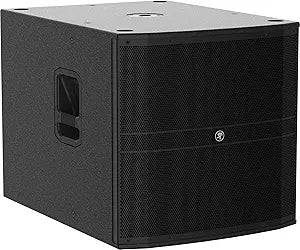
Mackie DRM18S-P 18" Passive Subwoofer
Deep, room-filling low end for demanding live sound rigs — the Mackie DRM18S-P 18" passive subwoofer delivers impactful bass without the amp onboard.
$799.99*
View on Amazon
✓ In Stock on Amazon.com
*Price sourced from Amazon.com. Last updated:Aug 29, 2026.Price and availability are subject to change — details.
Affiliate Disclosure: As an Amazon Associate, Studio Supplies earns from qualifying purchases made through links on this page, at no additional cost to you. This helps support our editorial team.
Notice a mistake? Let Us Know
Overview
Key Features
Passive Subwoofer with 18" High-excursion Woofer
Specifications
Type
Passive Subwoofer
Woofer Size
18" High-Excursion
Amplification
External (passive design)
Finish
Enclosure with flexible mounting options
Application
Live Sound Reinforcement
Frequently Asked Questions
What amplifier power does the DRM18S-P require to perform optimally?
The DRM18S-P is a passive design, so amplifier selection directly shapes what you hear. Mackie rates this sub for high-excursion output, so matching it with an amp that can deliver clean headroom well into the sub-bass range — 400W or more into the rated impedance — will let the 18" driver breathe without clipping artifacts muddying the low end.
What crossover point works best when integrating this sub with full-range tops?
The crossover is handled externally, either via your amp's built-in crossover or a dedicated processor. A 100–120 Hz crossover point is a standard starting place for 18" subs in live reinforcement, but dialing it in to match your tops' low-frequency rolloff produces the tightest integration — you want the handoff to be inaudible, not a honk or a gap.
Is this subwoofer suitable for both indoor venues and outdoor stages?
The DRM18S-P's rugged enclosure is built for the demands of live touring and installed sound. Outdoors, the lack of room boundary reinforcement means you'll need more driver excursion to fill the space — that's where the high-excursion woofer design earns its keep, maintaining output and definition at extended throw distances.
Can multiple DRM18S-P units be stacked or flown?
The enclosure's mounting options support stacking configurations, which is standard practice for sub arrays in live sound. Stacking two units not only increases SPL but also allows for cardioid sub techniques when paired with appropriate amp and DSP processing — a meaningful workflow advantage for controlling stage wash.
How does the passive design affect my overall system build compared to an active subwoofer?
With a passive sub, your signal chain requires an external amplifier and crossover — more components, more cable runs, more gain-staging decisions. The tradeoff is flexibility: you control the amp, the headroom, and the processing. For engineers who already run outboard amps and a system processor, the passive approach integrates cleanly and keeps the sub enclosure lighter on stage.
Related Products


