

Marshall
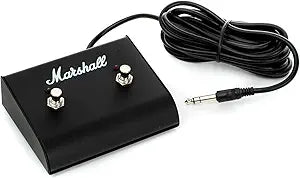
Marshall PEDL-91003 2-Button Amplifier Footswitch
Switch between clean and driven tones mid-song with hands-free channel control for your Marshall amp
View price on Amazon
Affiliate Disclosure: As an Amazon Associate, Studio Supplies earns from qualifying purchases made through links on this page, at no additional cost to you. This helps support our editorial team.
Notice a mistake? Let Us Know
Overview
Key Features
Dual-latching Footswitch with LEDs for Marshall Amplifiers
Specifications
Brand
Marshall
Model
PEDL-91003
Type
2-Button Amplifier Footswitch
Switch Type
Dual-Latching
Indicators
LED
Connector
Stereo Jack (TRS)
Compatible Amplifiers
Marshall DSL401, VS100R, SV100RH, VS102R
Power
Powered via amplifier (no batteries required)
Frequently Asked Questions
Which Marshall amplifiers is the PEDL-91003 compatible with?
It's designed for the Marshall DSL401, VS100R, SV100RH, and VS102R amplifiers. These amps use a stereo TRS jack for footswitch input, which matches the PEDL-91003's connector.
What functions do the two buttons control?
The two latching switches correspond to the channel and effects functions on compatible Marshall amps. Typically one button toggles between clean and overdrive channels, and the second engages or bypasses the amp's built-in reverb or effects loop, depending on the specific amp model.
Does this footswitch require external power or batteries?
No. The PEDL-91003 draws its power for the LED indicators directly from the amplifier through the stereo jack cable. There are no batteries to replace or external power supplies needed.
Is the switching latching or momentary?
Both switches are latching type, meaning you press once to engage and press again to disengage. This gives you a solid, definitive click that confirms the switch state, which is important in loud stage environments where you need tactile feedback.
Can I use this footswitch with non-Marshall amplifiers that have a stereo footswitch jack?
While the stereo TRS connector is a common standard, the switching polarity and function assignments vary between amp manufacturers. It may work with some non-Marshall amps, but Marshall designs this specifically for their compatible models and does not guarantee cross-brand functionality.
Related Products


