



Monoprice
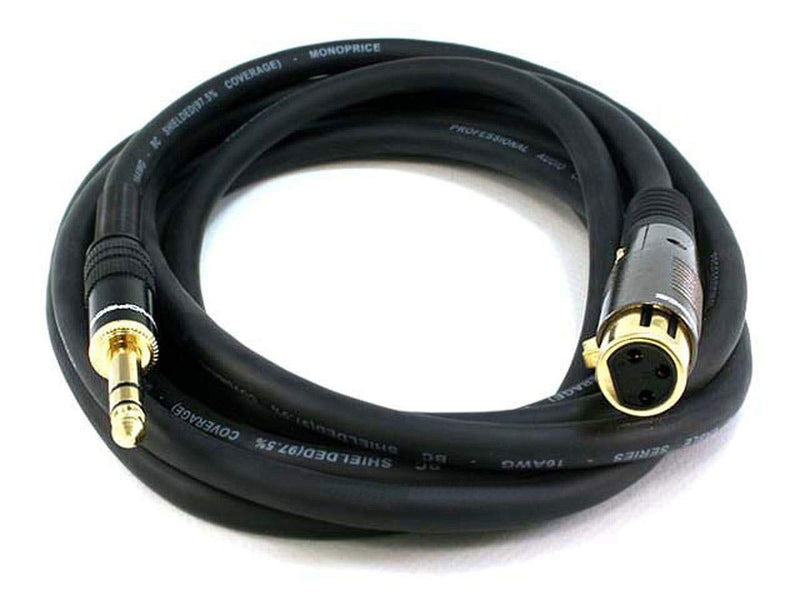
Monoprice 104770 XLR Female to 1/4" TRS Cable - 10ft
4inXLR
A 10-foot balanced XLR-to-TRS cable built with braided shielding for clean, noise-free audio connections.
View price on Amazon
Affiliate Disclosure: As an Amazon Associate, Studio Supplies earns from qualifying purchases made through links on this page, at no additional cost to you. This helps support our editorial team.
Notice a mistake? Let Us Know
Overview
Key Features
Balanced cables have a separate braided shield to provide additional resistance to interference without modulating the interference into the signal.
Prevents ground loop issues.
XLR to 1/4in TRS balanced pro audio cables provide high fidelity and eliminate noise in the recording studio and on the stage.
Our new premier series cables up the ante in terms of construction quality and performance.
Specifications
Brand
Monoprice
Model
104770
Connector 1
XLR Female
Connector 2
1/4-Inch TRS Male
Cable Length
10 Feet
Cable Gauge
16AWG
Shielding
Braided Shield
Signal Type
Balanced
Frequently Asked Questions
What connectors does this cable have?
One end has an XLR female connector and the other has a 1/4-inch TRS (tip-ring-sleeve) male connector, making it suitable for connecting balanced audio gear with different jack types.
Is this a balanced or unbalanced cable?
This is a balanced cable. It carries the audio signal on two conductors plus a separate braided shield, which rejects electromagnetic interference and prevents ground loop hum.
What gauge wire does this cable use?
It uses 16AWG conductors, which is a heavier gauge than many comparable cables and contributes to low signal loss over the 10-foot length.
Can I use this cable for a microphone connection?
Yes, as long as your mixer or interface has a 1/4-inch TRS balanced input. The XLR female end connects to a standard microphone XLR output, and the balanced design preserves signal integrity.
Is the braided shield better than a foil shield for noise rejection?
Braided shields generally offer superior coverage and durability compared to foil, providing stronger protection against radio-frequency and electromagnetic interference — especially useful in stage environments with many potential noise sources.
Related Products


