

Monoprice
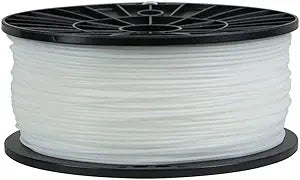
Monoprice 110546 White ABS 3D Printer Filament
Craft Your Creations with Monoprice Premium ABS Filament Achieve exceptional 3D printing quality with Monoprice ABS filament. This 1.75mm filament offers high tensile strength and toughness, perfect for creating durable and lightweight models. Specifications: Brand: Monoprice Model: 110546 ...
$36.37*$48.00Save 24%
Check availability
*Price sourced from Amazon.com. Last updated:Aug 27, 2026.Price and availability are subject to change — details.
Affiliate Disclosure: As an Amazon Associate, Studio Supplies earns from qualifying purchases made through links on this page, at no additional cost to you. This helps support our editorial team.
Notice a mistake? Let Us Know
Overview
Craft Your Creations with Monoprice Premium ABS Filament
Achieve exceptional 3D printing quality with Monoprice ABS filament. This 1.75mm filament offers high tensile strength and toughness, perfect for creating durable and lightweight models.
Specifications:
- Brand: Monoprice
- Model: 110546
- Material: ABS
- Filament Diameter: 1.75mm ±0.10mm
- Spool Weight: 1kg
- Roundness Variation: 0.05mm
- Nominal Processing Temperature: 230°C (446°F)
Key Features
ABS is one of the most commonly used filament types in 3D printing. It has a high tensile strength and good overall toughness.
It has a low density and is softer than PLA, which means lower weight and lower cost when printing large models.
This 1 kg spool features a thickness of 1.75mm ±0.10mm, with a roundness variation of only 0.05mm.
It has a nominal processing temperature of 230°C (446°F).
Thickness and roundness factors are laser measured at the factory to ensure accuracy over the entire length of the filament.
Specifications
Filament Type
ABS
Color
White
Spool Weight
1 kg
Filament Diameter
1.75mm
Diameter Tolerance
±0.10mm
Roundness Variation
0.05mm
Processing Temperature
230°C (446°F)
Frequently Asked Questions
What is the benefit of ABS filament having high tensile strength?
The high tensile strength of this ABS filament means your 3D printed models will be more resistant to stretching and breaking under tension, making them durable for functional parts.
How does the low density of this filament affect 3D printing projects?
The low density of this ABS filament contributes to lower overall weight for printed models, which can reduce material costs and make handling larger prints easier.
What is the significance of the 1.75mm ±0.10mm thickness and 0.05mm roundness variation?
These precise measurements, validated by laser measurement at the factory, ensure consistent filament feeding and extrusion, which is crucial for achieving high-quality and reliable 3D prints without clogging.
What processing temperature is recommended for this ABS filament?
This Monoprice ABS filament has a nominal processing temperature of 230°C (446°F), which should be taken into account for printer settings and environmental controls.
Is this filament suitable for printing large models?
Yes, its low density and softness compared to PLA make it a good candidate for printing larger models, as it can result in lower weight and potentially lower cost per print.
Related Products


