



Monoprice
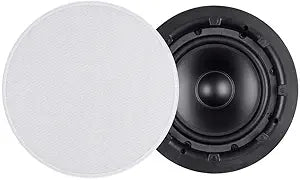
Monoprice 131032 Aria Series 10 Inch Passive In-Wall Subwoofer
10 Inch
Bridge the low-frequency gap in your in-wall speaker system with the Monoprice Aria 10-inch passive subwoofer — clean, discreet bass reinforcement without external boxes.
$94.99*$129.99Save 26%
Check availability
*Price sourced from Amazon.com. Last updated:Oct 07, 2026.Price and availability are subject to change — details.
Affiliate Disclosure: As an Amazon Associate, Studio Supplies earns from qualifying purchases made through links on this page, at no additional cost to you. This helps support our editorial team.
Notice a mistake? Let Us Know
Overview
Key Features
The MIT-1000s in-wall bridge speaker transforms your smaller 2-way in-wall or satellite speakers into full range monitors
This compact non-powered sub is not for replacing a decent powered LFE subwoofer
to bridge the frequency gap often found when trying to pair smaller speakers to a high powered subwoofer
Buy with Confidence: Monoprice not only stands behind every product we sell with a 1 year replacement warranty, we offer a 30-day money back guarantee as well
Quality at a Fair Price: Monoprice's rugged design and rigid quality control standards deliver high quality products at fair prices.
Specifications
Brand
Monoprice
Model
131032
Series
Aria
Type
In-Wall Passive Subwoofer
Subwoofer Size
10 inch
Maximum Power
200 Watts
Crossover
12dB at 200 Hz
Amplification
Passive (external amplifier required)
Frequently Asked Questions
What does "passive" mean in practice for the Aria 131032, and what does it require to operate?
Passive means the subwoofer has no built-in amplifier — it requires an external amplifier or A/V receiver with a dedicated subwoofer or speaker output to drive it. The amplifier's output power and crossover settings directly determine how this driver behaves in the system.
What is the built-in crossover frequency, and what does 12dB mean in practice?
The 131032 has an internal 12dB-per-octave crossover set at 200Hz. This rolls off signal above 200Hz sent to the subwoofer driver at 12dB per octave, blending the sub's output with your in-wall satellites. A 12dB slope is a second-order crossover — audibly gentler than steeper slopes, with a broader transition band that can require careful system tuning to avoid a bass hump at the crossover frequency.
Can the Aria 131032 replace a powered LFE subwoofer in a home theater setup?
No — Monoprice explicitly positions this as a frequency-gap bridge, not a replacement for a powered LFE subwoofer. It is designed to extend the low-frequency response of smaller in-wall or satellite speakers, not to produce the deep, high-output bass of a dedicated home theater subwoofer.
What is the maximum power handling for this subwoofer?
The 131032 is rated at 200 watts maximum power. Amplifier matching is important — consistently driving it beyond its power handling, or underpowering it with a clipping amplifier, can damage the driver.
Is the Aria 131032 suitable for in-wall installation in a standard residential wall cavity?
Yes — in-wall installation in a standard stud-bay cavity is the intended use case. The design aims to minimize the visible footprint while the wall cavity itself acts as the enclosure, which means the acoustic result is partially dependent on the volume and properties of the wall cavity it's installed in.
Related Products


