



Neewer
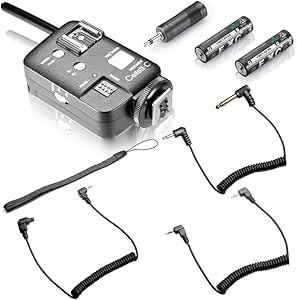
Neewer 10084512 CellsII-C Wireless Flash Trigger for Canon EOS
Dual-function transceiver unlocks high-speed sync up to 1/8000s for Canon EOS shooters working with studio strobes and Neewer speedlites.
Check availability
Affiliate Disclosure: As an Amazon Associate, Studio Supplies earns from qualifying purchases made through links on this page, at no additional cost to you. This helps support our editorial team.
Notice a mistake? Let Us Know
Overview
Key Features
All-in-one be a wireless transmitter and a receiver for studio flash/Speedlite Flash, and camera shutter.(Transfer between Receiver and Transmitter just Switch TX and RX)
Featuring multi-channel triggering, stable signal transmission, and sensitive reaction, it gives photographers unparalleled flexibility and control over their strobist setups. The transceiver applies to hotshoe-mounted Canon EOS series cameras.
With Cells II, high speed synchronization is available for most of studio flashes in the market. The max flash synchronization speed is up to 1/8000s. Speedlites and high-speed studio flashes can also achieve high speed synchronization when used with specific models of Canon EOS cameras. Not all camera-flash combinations can achieve high speed synchronization.
Max Sync Speed in Different Camera-Flash Combinations. *: 1/8000s is achievable when the camera has a max camera shutter speed of 1/8000s. 1/8000s is not achievable because some models of Canon EOS cameras has a max camera shutter speed of only 1/4000s;High-speed studio flashes refer to those having a flash duration shorter than 1/2000s and adopting IGBT technology.
All Neewer Products lineup are available in our amazon site including TT850, TT860C/N and Studio Strobe Flash and have suitable kit for different levels Photographers
Specifications
Model Number
10084512 CellsII-C
Compatibility
Canon EOS series cameras
Functionality
Wireless transmitter and receiver, camera shutter release
Synchronization Speed (Max)
Up to 1/8000s (with compatible cameras/flashes)
Multi-channel Triggering
Yes
Signal Transmission
Stable
Reaction Sensitivity
Sensitive
Frequently Asked Questions
Can the CellsII-C work as both transmitter and receiver from the same unit, or do I need to buy two?
One CellsII-C unit can function as either a transmitter or receiver — you switch modes via the TX/RX toggle on the transceiver itself. For a basic one-transmitter, one-receiver setup you need two units. The all-in-one design means each unit in your kit is interchangeable, so you're not locked into dedicated TX or RX roles if your setup changes.
Will I achieve 1/8000s sync speed with any Canon EOS camera and any flash?
Not automatically. Achieving 1/8000s requires both that your Canon EOS camera's maximum shutter speed reaches 1/8000s (some models top out at 1/4000s) and that the flash you're using has a duration shorter than 1/2000s with IGBT technology. Standard studio monolights without IGBT will sync at lower speeds. Verify both your camera's maximum shutter speed and your flash's technical specifications before relying on 1/8000s in a shoot.
Does the CellsII-C support TTL or manual power control from the transmitter?
Based on the available specifications, the CellsII-C provides wireless triggering — it fires the flash remotely — but does not offer TTL pass-through or remote power adjustment of the flash output. Power control must be set manually on the flash unit itself. This is a standard limitation of entry-level trigger systems.
Which Neewer flash models are confirmed compatible with the CellsII-C?
The CellsII-C is confirmed compatible with the Neewer TT520, TT560, TT680, TT850, Witstro series speedlites, and Neewer studio strobes. It is designed around the Neewer flash ecosystem; compatibility with third-party flashes that have a standard hotshoe sync port will vary and should be tested before a paid shoot.
How many channels does the CellsII-C support, and does that matter in a multi-photographer environment?
The CellsII-C features multi-channel triggering — multiple selectable channels that let you isolate your trigger signal from another photographer's system firing on a different channel. This is directly useful at workshops, multi-photographer events, or studio environments where more than one wireless trigger system is in use simultaneously.
Related Products

