


Neewer
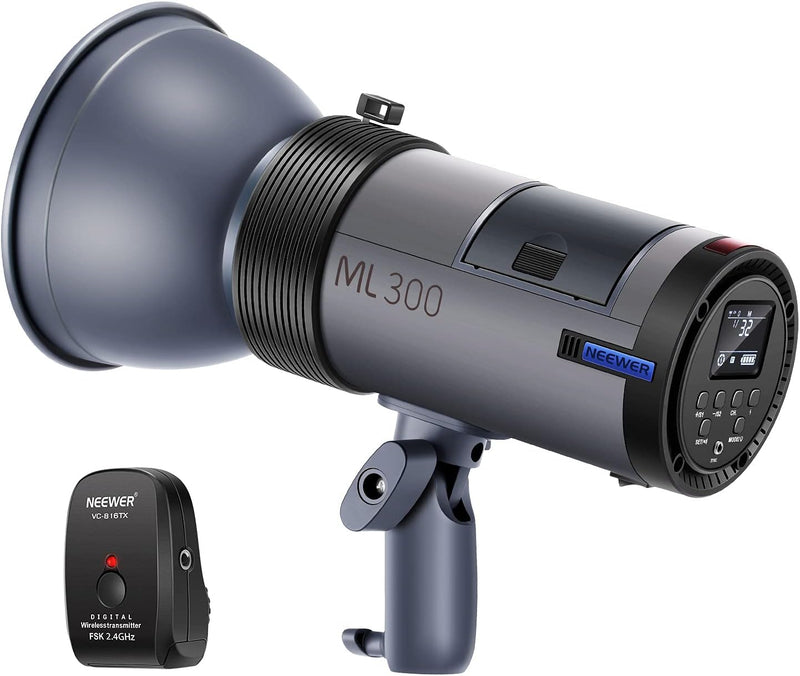
Neewer 10097273 ML300 300W Li-ion Battery Strobe Flash
A 300W battery-powered strobe with Bowens mount and 2.4G wireless for untethered on-location lighting.
View price on Amazon
Affiliate Disclosure: As an Amazon Associate, Studio Supplies earns from qualifying purchases made through links on this page, at no additional cost to you. This helps support our editorial team.
Notice a mistake? Let Us Know
Overview
Specifications
Power
300W
Guide Number
GN60 (1m, ISO 100) / GN197 (1ft, ISO 100)
Power Adjustment
6 steps (1/64 to 1/1)
Flash Duration
1/1000s to 1/10000s
Color Temperature
5500±200K
Battery
10.8V / 7800mAh Lithium-Ion
Flashes at Full Power
~1,000
Recycle Time
0.4–2.5 seconds
Wireless Trigger
2.4GHz, 16 channels, 20m range
Mount
Bowens
Frequently Asked Questions
How many full-power flashes can the ML300 fire on a single battery charge?
The built-in 10.8V/7800mAh lithium-ion battery delivers approximately 1,000 full-power flashes per charge, making it reliable for extended outdoor shooting sessions without needing a power outlet.
What light modifiers are compatible with the ML300?
The ML300 uses a Bowens mount, which is one of the most widely supported modifier systems available. This means you can attach a vast range of softboxes, beauty dishes, reflectors, snoots, and barn doors from Bowens-compatible manufacturers.
How is the ML300 triggered wirelessly?
It includes a 2.4GHz wireless trigger system with 16 selectable channels and a working distance of up to 20 meters. The wireless receiver is built into the strobe, so you only need the included transmitter on your camera's hot shoe.
What is the recycle time between flashes?
Recycle time ranges from 0.4 seconds at the lowest power setting to 2.5 seconds at full power. This allows for reasonably fast shooting sequences, especially when using reduced power levels.
How finely can you adjust the flash power output?
The ML300 offers 6-step power adjustment ranging from 1/64 to full power (1/1). This provides basic control over light intensity, though it lacks the finer fractional stops found on higher-end strobes.
Related Products

