

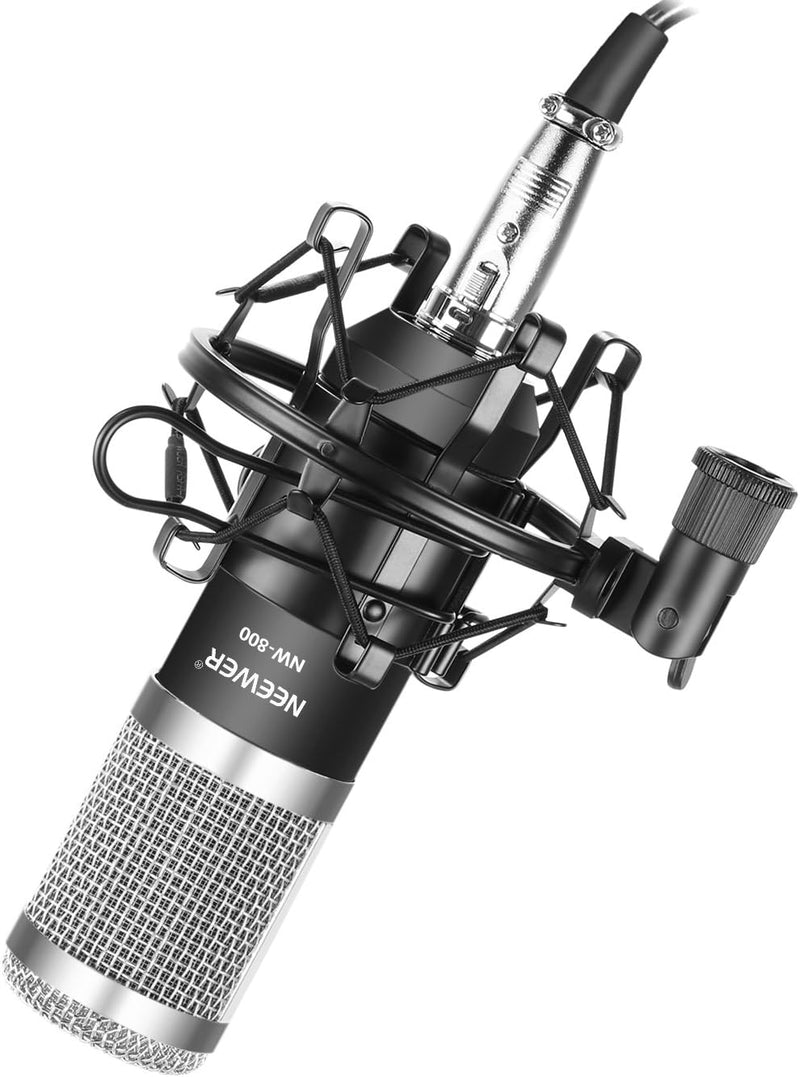


Neewer
Neewer 40092174 Cardioid Studio Condenser Microphone Set
Achieve Studio-Quality Sound with EaseThe Neewer NW-800 Pro Cardioid Studio Condenser Microphone Set is perfect for recording, broadcasting, and YouTube content creation. This comprehensive set includes everything you need to capture clear and professional audio. Microphone Type: Condenser ...
Check availability
Affiliate Disclosure: As an Amazon Associate, Studio Supplies earns from qualifying purchases made through links on this page, at no additional cost to you. This helps support our editorial team.
Notice a mistake? Let Us Know
Overview
Achieve Studio-Quality Sound with Ease
The Neewer NW-800 Pro Cardioid Studio Condenser Microphone Set is perfect for recording, broadcasting, and YouTube content creation. This comprehensive set includes everything you need to capture clear and professional audio.
- Microphone Type: Condenser
- Polar Pattern: Cardioid
- Frequency Response: 20Hz-16kHz
- Sensitivity: -38dB±2dB
- Output Impedance: 150Ω±30% (at 1kHz)
- Load Impedance: ≥1000 Ω
- Equivalent Noise Level: 16dBA
- Signal Noise: 78dB
- Electrical Current: 3mA
- Material: Metal
Specifications
Brand
Neewer
Model
40092174
Microphone Type
Studio Condenser
Polar Pattern
Cardioid
Product Type
Microphone Set
Frequently Asked Questions
What type of microphone is the Neewer 40092174?
The Neewer 40092174 is a Cardioid Studio Condenser Microphone.
What is a cardioid pickup pattern?
A cardioid pickup pattern primarily captures sound from the front of the microphone, reducing noise from the sides and rear.
Is this microphone suitable for studio recording?
Yes, it is explicitly referred to as a "Studio Condenser Microphone Set," indicating its suitability for studio environments.
What does "Microphone Set" imply for the Neewer 40092174?
A "Microphone Set" typically means it includes the microphone along with various accessories necessary for immediate use, though specific accessories are not listed.
Does this microphone require phantom power?
As a condenser microphone, it generally requires phantom power, which is usually supplied by an audio interface or mixer.
Related Products


