

Neumann
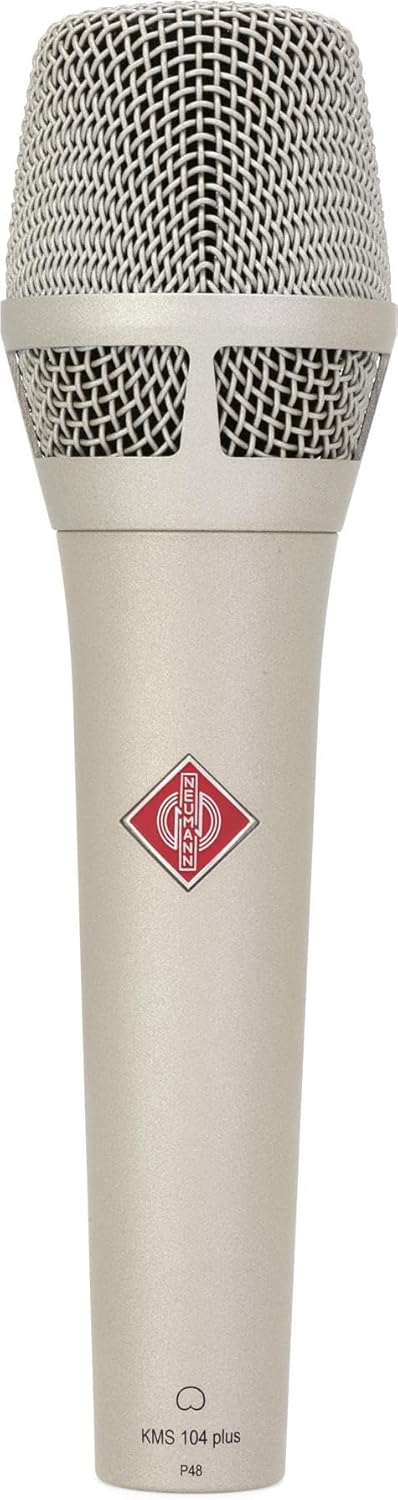
Neumann KMS 104 Plus Handheld Condenser Vocal Microphone
Condenser
Studio-grade transient clarity and extended low-end warmth from a handheld condenser built to perform under live-stage pressure.
$849.00*
Check availability
*Price sourced from Amazon.com. Last updated:Aug 27, 2026.Price and availability are subject to change — details.
Affiliate Disclosure: As an Amazon Associate, Studio Supplies earns from qualifying purchases made through links on this page, at no additional cost to you. This helps support our editorial team.
Notice a mistake? Let Us Know
Overview
Key Features
With Fixed Cardioid Directional Polar Pattern and Extended Bass Response
Handheld Vocal Condenser Mic
Specifications
Brand
Neumann
Model
008624 (KMS 104 Plus)
Type
Handheld Vocal Condenser Microphone
Polar Pattern
Cardioid (Fixed)
Frequency Range
20 Hz – 20 kHz
Signal-to-Noise Ratio
76 dB
Output Impedance
50 Ohm
Connectivity
XLR
Power Requirement
48V Phantom Power
Frequently Asked Questions
Does the KMS 104 Plus require phantom power?
Yes. As a condenser microphone, the KMS 104 Plus requires 48V phantom power from your mixing console or preamp. Confirm your interface or console supplies phantom power before patching this mic into a live or studio signal chain.
What does the "Plus" designation mean compared to the standard KMS 104?
The KMS 104 Plus is specifically designed for female vocalists and speakers, featuring an extended bass response that adds warmth and body to lighter or higher vocal registers. The standard KMS 104 has a flatter low-frequency response curve. The Plus variant is the better choice when extended low-end presence is the goal.
How does the KMS 104 Plus handle stage feedback?
The tight cardioid polar pattern provides strong off-axis rejection, which is the primary mechanism for feedback control in live environments. The cardioid pattern keeps the microphone focused on what's in front of it and rejects sound from the rear and sides, reducing feedback risk when positioned correctly relative to monitor wedges or PA systems.
What impedance and preamp gain requirements does this microphone have?
The KMS 104 Plus presents a 50-ohm source impedance — a low-impedance output typical of professional condenser microphones. Most professional preamps and console mic inputs handle this without issue. The 76 dB signal-to-noise ratio means the mic itself contributes very little noise; the quality of the downstream preamp becomes the limiting factor at high gain settings.
Is the KMS 104 Plus suitable for studio vocal tracking, or is it primarily a live microphone?
It performs in both environments, but its design is optimized for live vocal use — the cardioid pattern, robust build, and feedback rejection characteristics make it a natural stage microphone. In the studio, the extended bass response and high S/N ratio yield warm, detailed vocal tracks, though large-diaphragm condensers remain the conventional studio choice. Many performers use this mic live and in the studio for consistency across recordings and live performances.
Related Products


