



Neumann
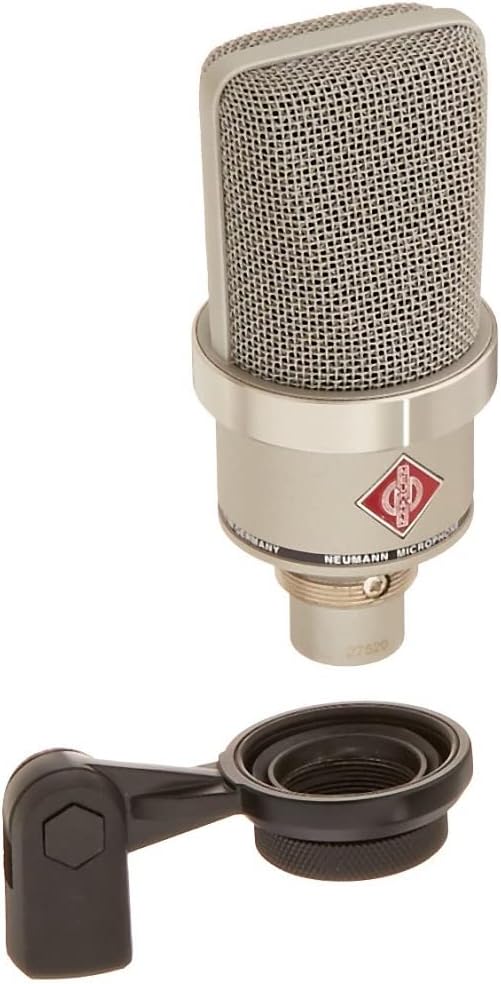
Neumann 008626 TLM 102 Nickel Condenser Microphone
Condenser
Capture Sound with Clarity and PrecisionThe Neumann TLM 102 Condenser Microphone offers exceptional sound quality in a compact design. Ideal for home recording, project studios, and broadcasting applications, this microphone delivers clear and detailed audio reproduction for vocals, instruments, ...
View price on Amazon
Affiliate Disclosure: As an Amazon Associate, Studio Supplies earns from qualifying purchases made through links on this page, at no additional cost to you. This helps support our editorial team.
Notice a mistake? Let Us Know
Overview
Capture Sound with Clarity and Precision
The Neumann TLM 102 Condenser Microphone offers exceptional sound quality in a compact design. Ideal for home recording, project studios, and broadcasting applications, this microphone delivers clear and detailed audio reproduction for vocals, instruments, and speech.
- Acoustical operating principle: Pressure gradient transducer
- Directional pattern: Cardioid
- Frequency range: 20 Hz - 20 kHz
- Sensitivity at 1 kHz into 1 kΩ: 11 mV/Pa
- Rated impedance: 50 Ω
- Rated load impedance: 1 kΩ
- Equivalent noise level, A-weighted: 12 dB-A
- Maximum SPL for THD 0.5%: 144 dB
- Supply voltage (P48, IEC 61938): 48 V +- 4 V
- Current consumption (P48, IEC 61938): 3.5 mA
- Connector: XLR 3F
- Weight: Approx. 210 g
- Diameter: 52 mm
- Length: 116 mm
- Includes: Stand mount
Key Features
Cardioid Condenser Microphone
Large-diaphragm
Transfmerless
Compact
Specifications
Microphone Type
Condenser
Polar Pattern
Cardioid
Diaphragm Size
Large-diaphragm
Circuitry
Transformerless
Finish
Nickel
Frequently Asked Questions
What type of microphone is the Neumann 008626 TLM 102 Nickel?
The Neumann 008626 TLM 102 Nickel is a large-diaphragm cardioid condenser microphone.
What does "cardioid condenser microphone" mean for recording?
A cardioid condenser microphone primarily picks up sound from the front, rejecting sounds from the sides and rear. This is beneficial for isolating a specific sound source and minimizing ambient noise.
Does the TLM 102 require a special power source?
As a condenser microphone, the Neumann TLM 102 typically requires phantom power, usually provided by a mixing board, audio interface, or dedicated power supply.
What does "transformerless" refer to in this microphone's design?
"Transformerless" refers to the microphone's output stage, which is designed without an output transformer. This often results in a very clean, linear frequency response and high signal-to-noise ratio.
Is the Neumann TLM 102 a compact microphone?
Yes, the Neumann TLM 102 is described as compact, making it suitable for various recording setups and placement options.
Related Products


