

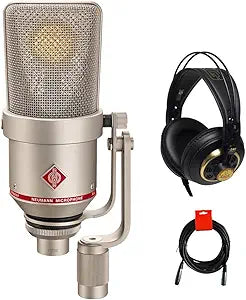


Neumann
Neumann TLM 170 R Multipattern Condenser Microphone Bundle
Condenser48Vphantom power
The Neumann TLM 170 R's five switchable polar patterns and transformerless circuit deliver the low noise floor and sonic neutrality that professional tracking sessions demand.
$3,500.00*
Check availability
*Price sourced from Amazon.com. Last updated:Aug 28, 2026.Price and availability are subject to change — details.
Affiliate Disclosure: As an Amazon Associate, Studio Supplies earns from qualifying purchases made through links on this page, at no additional cost to you. This helps support our editorial team.
Notice a mistake? Let Us Know
Overview
Key Features
Flat frequency response delivers true-to-life sound, Requires +48V phantom power
Five polar patterns for recording in any setup you can imagine
Simple navigation switch provides access to all essential settings
Smooth frequency response up to 8kHz ensures accuracy, while a slight presence boost brings out clarity and vocal intelligibility
Three selectable highpass settings and three selectable pad settings let you handle a wide range of recording scenario
Specifications
Microphone Type
Multipattern Condenser
Model
TLM 170 R
Frequency Response
Flat (up to 8kHz with slight presence boost)
Polar Patterns
Five selectable
Phantom Power Requirement
+48V
Highpass Settings
Three selectable
Pad Settings
Three selectable
Frequently Asked Questions
What self-noise specification does the TLM 170 R achieve, and does it matter for the sessions this mic is built for?
Transformerless condenser designs like the TLM 170 R achieve self-noise figures in the low-to-mid single digits (A-weighted), comfortably below the threshold where noise becomes audible on close-miked sources. This matters most when recording quiet acoustic instruments, solo voice with natural dynamics, or any source where you're pushing gain — the noise floor stays out of the way where transformer-based designs can introduce a slight coloration or hiss floor.
Does the TLM 170 R require phantom power, and at what voltage?
Yes — the TLM 170 R requires +48V phantom power, which is standard on all current professional audio interfaces and mixing consoles. It will not operate without phantom power applied; confirm your interface or console can supply +48V before connecting.
How do the three selectable highpass filters on the TLM 170 R help manage low-frequency content in practical recording situations?
The three highpass settings let you roll off proximity effect buildup on close-miked vocals or instruments, cut HVAC rumble and room LF energy in acoustic sessions, and compensate for low-end reinforcement that occurs when using omni or figure-8 patterns. Having multiple highpass options on the mic body means you can address LF issues at the source without committing to post-processing.
The TLM 170 R offers five polar patterns — in what practical recording scenarios does switching between them provide a meaningful advantage?
Cardioid is the default for solo tracking in treated rooms. Hypercardioid tightens rejection at the sides, useful when you need more isolation in a live room or want less room sound on overhead work. Omni opens up the room and eliminates proximity effect entirely — valuable for room recording, choral work, or natural ambience capture. Figure-8 captures front and back while rejecting sides, enabling classic mid-side stereo configurations and ribbon-alternative placements. Wide-angle cardioid broadens the pickup without going fully omnidirectional, useful for acoustic ensembles or two-player sessions with a single mic.
How does the TLM 170 R's transformerless output circuit affect integration with preamps and long cable runs?
The transformerless output provides a low-impedance balanced signal that drives long cable runs cleanly without transformer-related low-frequency roll-off or high-frequency saturation. The trade-off is that you lose the saturation and low-end weight some engineers associate with transformer-coupled microphones — the TLM 170 R is intentionally neutral, so the character of your preamp and room is what you hear in the signal.
Related Products


