

Nikon
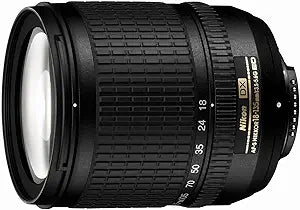
Nikon 18-135mm Renewed DX Zoom Lens
★★★★★
From wide street scenes at 18mm to compressed portraits at 135mm, this renewed Nikkor covers a full day of DX shooting with one lens and one bag.
$157.99*$389.00Save 59%
View on Amazon
✓ In Stock on Amazon.com
*Price sourced from Amazon.com. Last updated:Jul 14, 2026.Price and availability are subject to change.
Affiliate Disclosure: Studio Supplies may earn a commission from qualifying purchases made through links on this page, at no additional cost to you. This helps support our editorial team.
Notice a mistake? Let Us Know
Overview
Key Features
Versatile, High-power 7.5x Zoom-Nikkor lens
A Nikon Extra-Low Dispersion (ED) glass element delivers superior optical performance.
Focus as close as 1.47 feet throughout entire zoom range.
A seven-blade rounded diaphragm opening, out-of-focus elements appear more natural.
67mm Filter attachment size.
Specifications
Focal Length
18–135mm
Maximum Aperture
f/3.5–5.6
Lens Type
Zoom-Nikkor DX
Format Compatibility
Nikon DX (APS-C)
Special Elements
Nikon ED (Extra Low Dispersion) glass
Minimum Focus Distance
1.47 ft (throughout zoom range)
Diaphragm Blades
7 (rounded)
Filter Thread Diameter
67mm
Zoom Ratio
7.5x
Autofocus Type
AF-S (Silent Wave Motor)
Condition
Renewed (professionally inspected and tested)
ASIN
B083NX797N
Pros & Cons
👍 Pros
- The 7.5x zoom range from 18mm to 135mm covers wide environmental shots, standard walk-around focal lengths, and short telephoto reach in a single lens — genuinely reducing what you carry to a shoot.
- The ED glass element controls chromatic aberration at the longer end of the range, keeping high-contrast edges clean in backlit and architectural work where lesser zoom lenses fringe badly.
- 1.47-foot minimum focus distance held throughout the zoom range lets you fill the frame with moderate-sized subjects at 135mm without repositioning.
- The seven-blade rounded diaphragm produces smooth, natural-looking background separation that out-of-focus elements deserve — especially noticeable in portrait work at the longer focal lengths.
- The 67mm filter thread is a common diameter, so polarizers, ND filters, and protection filters carry over from other lenses in many kits without buying duplicates.
👎 Cons
- Variable aperture (f/3.5–5.6) means you lose over a stop of light as you zoom toward 135mm — a real constraint when shooting indoor events or low-light venues without flash.
- At 18mm and wide apertures, corner sharpness on DX sensors is softer than at mid-range focal lengths — close crops of edge detail in architecture or landscape work will show this.
- No internal zoom mechanism means the barrel extends at longer focal lengths, adding length to your bag and making the balance feel front-heavy on lighter DX bodies.
- Focus hunting in dim or low-contrast scenes is noticeable — the AF-S motor slows considerably when subject separation is weak, which disrupts timing on candid or event work.
- As a renewed unit, cosmetic wear (barrel scuffing, zoom ring texture) varies and won't match a new lens — functional but not pristine for those who care about kit condition.
Frequently Asked Questions
Which Nikon camera bodies is this lens compatible with?
This is a DX-format lens designed for Nikon's APS-C sensor DSLRs — bodies like the D3500, D5600, D7500, and similar crop-sensor Nikons. It will physically mount on full-frame Nikon F-mount bodies but will produce significant vignetting; it's intended for and optimized for DX sensor cameras.
What does the ED glass element actually improve in real-world shooting?
Nikon's Extra Low Dispersion glass reduces chromatic aberration — the color fringing that shows up at high-contrast edges, particularly wide-open or at long focal lengths. In practice, you'll see cleaner, crisper edge transitions in foliage detail, backlit subjects, and high-contrast architecture compared to lenses without ED elements.
How close can this lens focus, and does minimum focus distance change across the zoom range?
The 18-135mm focuses as close as 1.47 feet (approximately 0.45m) throughout the entire zoom range — a useful consistency that means you don't have to step back when shooting close subjects at longer focal lengths. It won't replace a dedicated macro lens, but it handles product detail and environmental portraits without hunting.
Is autofocus fast enough for moving subjects?
The AF-S (Silent Wave Motor) drive is quiet and reasonably responsive for stationary and slow-moving subjects. For fast sports or birds-in-flight work, dedicated telephoto lenses with faster AF motors will outperform it — but for travel, events, and general walkabout shooting, the AF-S system tracks competently.
What should I know about buying this as a renewed lens?
Renewed means the lens has been professionally inspected and tested — optics, autofocus mechanics, aperture blades, and mount contacts. The glass should be free of fungus, significant dust, or delamination. It's a sound value proposition for a lens at this focal length range, though checking the seller's return policy before purchase is always recommended.
Related Products


