



Nikon
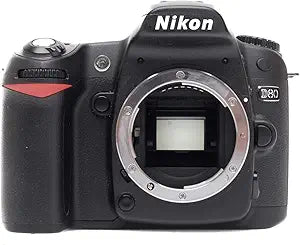
Nikon 25412 D80 DSLR Camera Body (OLD MODEL)
The camera that taught a generation of photographers to shoot RAW — the Nikon D80 still delivers when you understand its strengths.
$699.99*
View on Amazon
✓ In Stock on Amazon.com
*Price sourced from Amazon.com. Last updated:Oct 21, 2026.Price and availability are subject to change — details.
Affiliate Disclosure: As an Amazon Associate, Studio Supplies earns from qualifying purchases made through links on this page, at no additional cost to you. This helps support our editorial team.
Notice a mistake? Let Us Know
Overview
Key Features
10.2-megapixel CCD captures enough detail for large, photo-quality prints
Body only; lens must be purchased separately
2.5-inch LCD display; power-up time of approximately 0.2 seconds
RAW and JPEG capture; burst mode allows for capture of three frames per second for up to 100 pictures
Image optimization functions and in-camera image retouching
Specifications
Sensor
10.2MP DX-format CCD
Lens Mount
Nikon F-mount
LCD Display
2.5-inch
Startup Time
Approximately 0.2 seconds
Burst Mode
3 fps, up to 100 frames
Autofocus Points
11-area
File Formats
RAW (NEF), JPEG
In-Camera Editing
Image optimization, retouching
Body Configuration
Body only (no lens included)
Frequently Asked Questions
Which Nikon lenses are compatible with the D80?
The D80 uses the Nikon F-mount, so it accepts a wide range of Nikkor lenses including AF-S, AF-D, and older AF lenses. However, it lacks a built-in focus motor for screw-drive AF lenses — those will autofocus fine since the D80 does have the in-body motor. G-series lenses with no aperture ring work fully. Pre-AI lenses require modification or manual use only.
How does the 10.2MP CCD sensor compare to modern sensors for portrait work?
For portraits shot in good light, the CCD sensor delivers a film-like tonal smoothness that many photographers still find pleasing. It won't match a modern sensor in dynamic range or high-ISO performance, but in controlled or natural light, the files have a warmth and character that holds up well for print-sized portraits.
What is the practical high-ISO limit for usable images?
ISO 400–800 is the D80's comfortable range for clean files. ISO 1600 introduces visible noise but is workable with noise reduction in post. ISO 3200 (Hi 1) is available but is noticeably degraded — not ideal for anything larger than web use.
Does the D80 support RAW shooting, and what software reads the files?
Yes, the D80 shoots Nikon NEF (RAW) files. Adobe Lightroom, Capture NX-D (Nikon's free software), and most modern raw processors support the D80's NEF format without issues.
What is the burst rate and buffer depth?
The D80 shoots at 3 frames per second with a buffer of up to 100 frames in JPEG or approximately 6–7 frames in RAW before the buffer fills and the frame rate drops.
Related Products


