



Nikon
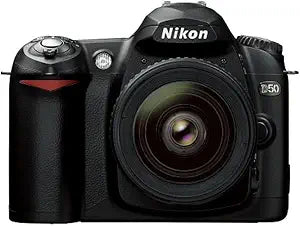
Nikon D50 DSLR Camera with 18-55mm Lens Kit
2.0 inch19 inch
The camera that taught a generation to shoot — the Nikon D50 kit delivers genuine DSLR quality and Nikkor optics in an approachable, proven package.
$699.00*
View on Amazon
✓ In Stock on Amazon.com
*Price sourced from Amazon.com. Last updated:Oct 21, 2026.Price and availability are subject to change — details.
Affiliate Disclosure: As an Amazon Associate, Studio Supplies earns from qualifying purchases made through links on this page, at no additional cost to you. This helps support our editorial team.
Notice a mistake? Let Us Know
Overview
Key Features
Stores images on SD cards , powered by Lithium ion battery (battery and Quick Charger supplied)
2.0 inch LCD display , 7 scene modes, including new Child mode
Compatible with AF and DX Nikkor lenses , kit includes 18 to 55 millimeter f3.5-5.6G ED AF-S DX Zoom Nikkor lens
6.1 megapixel sensor captures enough detail for photo quality 14 x 19 inch prints
Continuous shooting at 2.5 frames per second for bursts of up to 137 pictures
6.1-megapixel sensor captures enough detail for photo-quality 14 x 19-inch prints
Compatible with AF and DX Nikkor lenses; kit includes 18-55mm f3.5-5.6G ED AF-S DX Zoom Nikkor lens
Continuous shooting at 2.5 frames per second for bursts of up to 137 pictures
2.0-inch LCD display; 7 scene modes, including new Child mode
Stores images on SD cards; powered by Lithium-ion battery (battery and Quick Charger supplied)
Specifications
Sensor Resolution
6.1 megapixels
Maximum Print Size
14 x 19 inches
Lens Included
18-55mm f3.5-5.6G ED AF-S DX Zoom Nikkor lens
Lens Compatibility
AF and DX Nikkor lenses
Continuous Shooting Speed
2.5 frames per second
Maximum Burst Capacity
137 pictures
LCD Display Size
2.0 inches
Scene Modes
7 (including Child mode)
Storage Media
SD cards
Battery Type
Lithium-ion
Frequently Asked Questions
What kind of images can I realistically get from the D50's 6.1-megapixel sensor?
6.1 megapixels is enough to produce photo-quality prints up to 14x19 inches — so for standard portrait, event, and family photography, the output is entirely usable. The sensor performs best at its base ISO of 200 in good light; the APS-C size gives natural background separation at normal portrait distances with the kit lens wide open.
Is the included 18-55mm lens a useful range for everyday shooting?
For a walk-around or first DSLR kit lens, 18-55mm covers the practical range well — 18mm on an APS-C sensor gives you a 27mm equivalent for environmental shots, while 55mm (82mm equivalent) is a workable short portrait focal length. The f/3.5-5.6 aperture range is modest in low light, but the ED glass element helps control chromatic aberration across the zoom range.
What Nikon lenses are compatible with the D50 body?
The D50 uses Nikon's F-mount and is compatible with AF Nikkor and DX Nikkor lenses. Note that the D50 does not have an in-body focus motor, so it requires AF-S (Silent Wave Motor) lenses for autofocus — older AF lenses without a built-in motor will mount but only focus manually.
How does the D50 handle burst shooting for events or action?
At 2.5 frames per second with a buffer of up to 137 frames, the D50 can sustain a burst through most event moments — a child blowing out birthday candles, a wedding processional, youth sports action at moderate speed. It won't keep up with a pro sports shooter's needs, but for general event work the buffer depth is genuinely useful.
What storage does the D50 use, and is it still easy to source?
The D50 stores images on SD cards, which remain universally available and inexpensive. There are no proprietary formats to hunt for — any standard SD card works, though Class 10 or UHS-I cards will help keep up with burst shooting.
Related Products


