

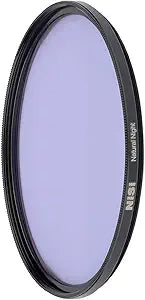


NiSi
NiSi 108698 95mm Natural Night Filter
★★★★★
Reclaim the Milky Way from sodium-vapor skies — NiSi's 95mm Natural Night Filter cuts light pollution without killing your stars.
$199.00*
View on Amazon
✓ In Stock on Amazon.com
*Price sourced from Amazon.com. Last updated:Jul 14, 2026.Price and availability are subject to change.
Affiliate Disclosure: Studio Supplies may earn a commission from qualifying purchases made through links on this page, at no additional cost to you. This helps support our editorial team.
Notice a mistake? Let Us Know
Overview
Key Features
Perfect for night scenes & astrophotography
Blocks light wavelengths from common sources of light pollution, removing yellow/orange light wavelengths
Ultra slim frame
Ultra high definition optical glass
NiSi Nano Coating - waterproof, scratch resistant, and easy to clean
Specifications
Filter Type
Natural Night Filter
Filter Size
95mm
Application
Night scenes, Astrophotography
Light Pollution Blocking
Yellow/orange light wavelengths
Frame
Ultra slim
Glass Type
Ultra high definition optical glass
Coating
NiSi Nano Coating
Coating Properties
Waterproof, Scratch resistant, Easy to clean
Pros & Cons
👍 Pros
- Blocks the specific yellow and orange sodium-vapor wavelengths that dominate urban and suburban light pollution, dramatically improving sky color rendition in compromised locations.
- Ultra-slim frame design reduces the risk of mechanical vignetting on the large-diameter wide-angle lenses commonly used for astrophotography.
- Ultra high definition optical glass preserves the fine star point resolution that a lower-quality filter would smear or introduce aberrations to.
- NiSi Nano Coating resists moisture, dust, and finger oils — keeping the filter usable through dewy night shoots without constant re-cleaning.
- Scratch resistance means it travels and stores more safely than uncoated optical glass of comparable quality.
👎 Cons
- No effect in truly dark-sky locations free of artificial lighting — the filter's value is entirely dependent on the presence of sodium-vapor or mercury-vapor light sources in your scene.
- Introduces approximately 1 stop of light loss, which requires exposure compensation and can limit already-tight shutter speed choices for star-point work without star trails.
- At 95mm, this is a premium filter size — the price reflects that, and it's not a casual impulse purchase for occasional night shooters.
- Will not correct for broadband LED light pollution, which is increasingly common in modern street lighting and which requires a different filter approach.
- Color rendering during twilight transitions may show a slight cast that needs correction in post if used before full astronomical darkness.
Frequently Asked Questions
Will this filter noticeably change the color of my night sky images?
Yes, in the best way. The filter specifically blocks the yellow and orange wavelengths produced by sodium-vapor and mercury-vapor streetlights, which are the dominant source of the color cast that turns night skies that muddy orange-brown. Stars, nebulae, and the natural blue-black of a dark sky come through with far truer rendition compared to unfiltered shots in light-polluted areas.
Does the ultra-slim frame cause vignetting on wide-angle lenses at 95mm?
The slim profile is designed to minimize vignetting, which matters most on the wide-angle and ultra-wide lenses that astrophotographers favor. At 95mm filter size, you're typically using it on large-diameter wide or standard zooms — the slim frame reduces the chance of corner darkening at wider focal lengths, but very wide primes pushed to their absolute minimum focus distance may still show some at the edges.
Can I use this filter for daytime photography, or is it only for night work?
It's purpose-built for night and astrophotography. During the day it provides no meaningful benefit and will introduce a visible color cast to daylight exposures. Keep it for after-dark work where light pollution is present.
How durable is the NiSi Nano Coating, and how do I clean it safely?
The Nano Coating is designed to be waterproof and scratch-resistant, and it significantly reduces the adhesion of dust, moisture, and fingerprints to the glass surface. For cleaning, a light breath and a microfiber cloth are usually sufficient — the coating means you're not scrubbing hard at contaminants baked into bare glass.
How much exposure compensation do I need to add when using this filter at night?
The Natural Night Filter has a modest light transmission reduction — typically around 1 stop depending on the specific wavelengths in your shooting environment. In practice, for long-exposure astrophotography you're already shooting at ISO 1600–6400 with multi-second exposures, so the adjustment is minimal. Test your specific scene, but expect to add roughly 1 stop to your baseline night exposure.
Related Products


