



NiSi
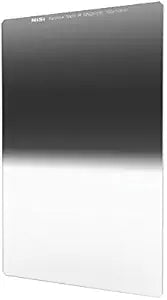
NiSi 6729 100x150mm Reverse Graduated ND8 Filter
★★★★★
Tame bright horizons without sacrificing foreground exposure — the Reverse ND8 is built for the golden hour shots that standard GNDs ruin.
$149.00*
View on Amazon
✓ In Stock on Amazon.com
*Price sourced from Amazon.com. Last updated:Jul 14, 2026.Price and availability are subject to change.
Affiliate Disclosure: Studio Supplies may earn a commission from qualifying purchases made through links on this page, at no additional cost to you. This helps support our editorial team.
Notice a mistake? Let Us Know
Overview
Key Features
Graduated filter with a hard-edged transition to a darkened density of 0.9, or a 3 stop light reduction. The transition starts from the middle and transitions to the top of the filter
Similar to hard-edged GNDs except that the darkest part of the filter is at the transition point
True to life color, No color cast
High definition optical glass with NiSi Nano Coating on both sides - waterproof, anti-reflection, scratch resistant, and easy to clean
Compatible with the NiSi 100mm System and any other systems that hold 100x150mm filters with 2mm thickness
Specifications
Filter Type
Reverse Graduated Neutral Density
Size
100 x 150mm
Thickness
2mm
Density
ND8 (0.9) — 3 stop reduction
Transition Style
Hard-edge, density peaks at midpoint
Material
Optical glass
Coating
NiSi Nano Coating (both sides) — waterproof, anti-reflection, scratch resistant
Compatibility
NiSi 100mm System; any holder accepting 100x150mm / 2mm filters
Color Cast
None (neutral)
Pros & Cons
👍 Pros
- The reverse density gradient eliminates the bright midzone band that makes standard hard-edge GNDs unusable for low-angle sunrise and sunset shooting.
- NiSi's Nano coating on both sides resists fingerprints and water droplets, keeping cleaning time between shots minimal during fast-moving golden hour windows.
- True neutral color transmission means your sky-to-land white balance holds consistently across a sequence without per-frame correction in post.
- Optical glass construction at 2mm thickness maintains corner sharpness across the frame — no soft edges or chromatic fringing introduced by the filter itself.
- Fits the widely adopted NiSi 100mm system, so it slots into an existing holder without adapters or workarounds.
👎 Cons
- The hard transition line requires precise filter positioning — misplace it even slightly and the density band becomes visible in shots with a flat, uncluttered horizon.
- At 100x150mm and optical glass, the filter adds real weight to a 100mm holder stack; carrying multiple GND strengths across a long hike adds up.
- The 3-stop (ND8) reduction covers the most common exposure scenario but won't replace a dedicated 6-stop or 10-stop ND for long-exposure water work — it's a single-purpose tool.
- Not ideal for scenes where the horizon is broken by mountains, trees, or buildings — the density line crosses those elements and creates unnatural darkening unless you plan to blend exposures in post.
Frequently Asked Questions
What makes a reverse GND different from a standard hard-edge GND for landscape shooting?
On a standard hard-edge GND, the darkest density sits at the top and lightens downward — which works fine when the sun is high. The reverse GND inverts that curve: maximum density falls at the transition line and gradually lightens both upward and downward. That's exactly what you need when the sun is near the horizon, where a standard GND would leave a bright band right where the sun sits. Shoot a coastal sunrise and you'll feel the difference immediately.
How much light does this filter actually block, and where?
The NiSi 6729 provides a 3-stop (0.9 ND) reduction at the transition zone, which is centered at the midpoint of the 150mm length. The density fades toward the top edge, so a sky with a bright horizon balances more naturally across the full frame than it would with a uniform top-heavy filter.
Will this introduce a color cast into my raw files?
No — NiSi's Nano IR coating on both sides is designed for neutral color transmission. You should not see warm or cool shifts in your raw files, which keeps white balance corrections predictable in post.
What filter system does this fit, and can I stack it with other NiSi filters?
It's designed for the NiSi 100mm modular system and any holder that accepts 100x150mm filters at 2mm thickness. You can stack it with NiSi circular polarizers or ND stops in the same holder, though stacking adds potential for vignetting at wider focal lengths — check your holder configuration before committing to a wide-open stack.
Is this filter suitable for seascape and coastal shooting where spray is common?
The Nano coating is waterproof and easy to wipe clean, which makes it practical in wet coastal conditions. It's not impervious to heavy spray, but a microfiber cloth clears water spots quickly between exposures — far easier than working with uncoated glass in the same environment.
Related Products


