



NiSi
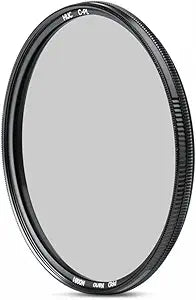
NiSi 88399 46mm HUC C-PL Polarizing Filter
★★★★★
Cut through haze, pull saturated color from skies, and eliminate glare off water — the NiSi 46mm HUC C-PL delivers polarizer performance with a nano-coated edge.
$49.00*
View on Amazon
✓ In Stock on Amazon.com
*Price sourced from Amazon.com. Last updated:Jul 14, 2026.Price and availability are subject to change.
Affiliate Disclosure: Studio Supplies may earn a commission from qualifying purchases made through links on this page, at no additional cost to you. This helps support our editorial team.
Notice a mistake? Let Us Know
Overview
Key Features
Greater color and tonal saturation, reduces haze in Landscapes
Eliminates Reflections and Glare
Knurled edges for easy install, removal, and rotation to adjust polarization
High definition optical glass
NiSi Nano Coating - waterproof, anti-reflection, scratch resistant, and easy to clean
Specifications
Filter Type
Circular Polarizing (C-PL)
Filter Size
46mm
Coating
PRO Nano Coating (HUC — High Ultraviolet Coating)
Coating Properties
Waterproof, anti-reflection, scratch resistant
Optical Glass
High-definition optical glass
Ring Design
Knurled rotating edge
Primary Function
Reduces reflections and glare, enhances color saturation, reduces haze
Ideal Applications
Landscape, long-exposure, outdoor photography and video
Pros & Cons
👍 Pros
- Maximum polarization visibly deepens blue sky saturation and increases cloud-to-sky contrast in a single rotation — no post-processing required to achieve what the filter does optically.
- PRO Nano Coating provides waterproofing and scratch resistance that justifies using this filter in field conditions — rain, sea spray, and dusty outdoor shoots — without the anxiety of a bare uncoated filter.
- Knurled edge ring makes rotation accurate and tactile in the field, including with gloves or at awkward shooting angles where smooth filter rings slip.
- Anti-reflection coating within the optical stack reduces internal flare on high-contrast scenes — bright windows, direct sun in frame — where polarizers from lesser manufacturers introduce visible ghosting.
- High-definition optical glass maintains sharpness and color fidelity at the filter element, avoiding the soft edges that low-quality polarizer glass introduces.
👎 Cons
- Approximately 1.5–2 stop light reduction at maximum polarization requires exposure compensation — in fast-moving event work or low-light conditions, this light loss is a practical constraint.
- The rotating front element adds thickness to the filter stack compared to a fixed UV filter, which can cause corner vignetting on ultra-wide focal lengths where 46mm is the filter thread size.
- Polarization effect is angle-dependent and strongest at 90 degrees to the sun — in overcast, flat, or backlit lighting conditions, the filter's reflection-cutting and saturation effects are significantly reduced.
- At 46mm, this filter fits a smaller range of lenses — photographers shooting across a kit with multiple filter thread sizes will need additional step-up rings or separate filter purchases for each thread diameter.
Frequently Asked Questions
How does rotating the NiSi HUC C-PL affect what I see in the viewfinder, and how do I know I've hit maximum polarization?
Rotate the front ring slowly while watching your sky or a reflective surface in the viewfinder. Maximum polarization occurs at the point where reflections disappear and blue sky reaches its deepest saturation — you'll see a visible transition in real time. The knurled edge on the NiSi makes one-handed rotation practical even with the camera at eye level.
Does the HUC nano coating affect image sharpness or introduce color cast?
The PRO Nano Coating is designed specifically to minimize reflections within the optical stack, which reduces flare and contrast loss rather than causing it. NiSi uses high-definition optical glass, and the coating's anti-reflection properties help preserve edge-to-edge sharpness. Some circular polarizers from budget manufacturers introduce a mild warm cast — this filter is engineered to hold neutral color rendition.
How much light does this filter block, and do I need to adjust exposure when it's attached?
A circular polarizer typically reduces incoming light by approximately 1.5 to 2 stops depending on rotation angle and the angle of light. At maximum polarization, expect to compensate exposure accordingly — in aperture priority or manual mode, you'll need to open up slightly or slow your shutter speed. In auto modes, the camera metering will compensate automatically.
Is a 46mm polarizer useful for video work, or is it primarily a still photography tool?
Circular polarizers are equally useful for video — eliminating window reflections, managing sky exposure, and suppressing glare off water or wet surfaces are all relevant for video capture. The NiSi HUC's waterproof nano coating also helps in field conditions where lens protection matters. The key consideration for video is that you'll need to re-check polarization angle if your camera angle changes significantly between shots.
Will this filter cause vignetting on ultra-wide lenses at 46mm?
Circular polarizers are thicker than standard UV filters due to the rotating front element. On ultra-wide lenses at 46mm, vignetting in corners is possible — particularly at wider focal lengths below 24mm equivalent. On standard and telephoto lenses where 46mm is the common filter thread size, vignetting is typically not an issue.
Related Products


