

NVIDIA
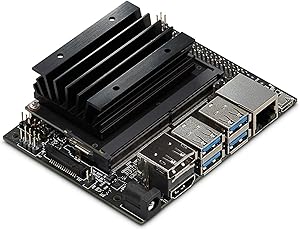
NVIDIA 945-13450-0000-100 Jetson Nano Developer Kit
★★★★★
Unleash AI Potential with Compact Processing PowerIntroducing the NVIDIA Jetson Nano Developer Kit. This kit offers exceptional compute performance for running modern AI workloads with efficient power consumption. It's ideal for developers, learners, and makers exploring applications like image c...
View price on Amazon
Affiliate Disclosure: Studio Supplies may earn a commission from qualifying purchases made through links on this page, at no additional cost to you. This helps support our editorial team.
Notice a mistake? Let Us Know
Overview
Unleash AI Potential with Compact Processing Power
Introducing the NVIDIA Jetson Nano Developer Kit. This kit offers exceptional compute performance for running modern AI workloads with efficient power consumption. It's ideal for developers, learners, and makers exploring applications like image classification, object detection, and speech processing.
Overview: The NVIDIA Jetson Nano Developer Kit provides a comprehensive platform for AI development, supported by NVIDIA JetPack. This kit simplifies the creation and deployment of AI solutions with its extensive I/Os and compatibility across the NVIDIA Jetson family. Specifications:- Brand: NVIDIA
- Model: 945-13450-0000-100
- Key Features: Delivers compute performance for modern AI workloads at unprecedented size, power, and cost.
- Applications: Image classification, object detection, segmentation, and speech processing.
- Power Efficiency: Consumes as little as 5 watts.
- Software Support: NVIDIA JetPack (BSP, Linux OS, NVIDIA CUDA, cuDNN, TensorRT)
Key Features
The NVIDIA Jetson Nano Developer Kit delivers the compute performance to run modern AI workloads at unprecedented size, power, and cost. Developers, learners, and makers can now run AI frameworks and models for applications like image classification, object detection, segmentation, and speech processing.
The developer kit can be powered by micro-USB and comes with extensive I/Os, ranging from GPIO to CSI. This makes it simple for developers to connect a diverse set of new sensors to enable a variety of AI applications. And it is incredibly power-efficient, consuming as little as 5 watts.
Jetson Nano is also supported by NVIDIA JetPack, which includes a board support package (BSP), Linux OS, NVIDIA CUDA, cuDNN, and TensorRT software libraries for deep learning, computer vision, GPU computing, multimedia processing, and much more. The software is even available using an easy-to-flash SD card image, making it fast and easy to get started.
The same JetPack SDK is used across the entire NVIDIA Jetson family of products and is fully compatible with NVIDIA’s world-leading AI platform for training and deploying AI software. This proven software stack reduces complexity and overall effort for developers.
Specifications
Brand
NVIDIA
Model
Jetson Nano Developer Kit
Power Input
Micro-USB (as low as 5 watts)
I/Os
GPIO, CSI
Software Support
NVIDIA JetPack (BSP, Linux OS, NVIDIA CUDA, cuDNN, TensorRT)
Applications
Image classification, object detection, segmentation, speech processing
Pros & Cons
👍 Pros
- Delivers compute performance capable of running modern AI workloads, making it suitable for advanced applications.
- Supports AI frameworks and models for various applications including image classification, object detection, segmentation, and speech processing.
- Can be powered by micro-USB, offering convenient and accessible power options.
- Comes with extensive I/Os, ranging from GPIO to CSI, enabling connection to a diverse set of new sensors.
- Operates with remarkable power efficiency, consuming as little as 5 watts, which is beneficial for embedded systems.
- Supported by NVIDIA JetPack, a comprehensive SDK including a BSP, Linux OS, and various software libraries for AI development.
- The software stack is available as an easy-to-flash SD card image, simplifying the setup process for developers.
- Fully compatible with NVIDIA’s world-leading AI platform, ensuring a robust ecosystem for AI training and deployment.
👎 Cons
- Requires an external micro-USB power source or other power input, which is not included in the kit itself.
- The kit is primarily aimed at developers, learners, and makers, suggesting a learning curve for beginners without prior experience.
- While it comes with extensive I/Os, specific sensor compatibility or recommendations are not detailed.
- The compact size might limit the integration of larger, more complex additional components without external enclosures.
- Requires an SD card for the OS, which must be sourced separately by the user.
- Specific clock speeds, core counts beyond general compute performance, and memory configuration are not provided.
Frequently Asked Questions
What kind of applications can the NVIDIA Jetson Nano Developer Kit run?
The Jetson Nano Developer Kit is designed to run modern AI workloads, including applications like image classification, object detection, segmentation, and speech processing.
How is the Jetson Nano Developer Kit powered?
The developer kit can be powered conveniently via micro-USB, and it is notably power-efficient, consuming as little as 5 watts.
What kind of connectivity options does the Jetson Nano offer for sensors?
It comes with extensive I/Os, ranging from GPIO to CSI, which simplifies the process for developers to connect a diverse array of new sensors.
What software is included with the Jetson Nano Developer Kit?
The kit is supported by NVIDIA JetPack, which comprises a board support package (BSP), Linux OS, and NVIDIA software libraries like CUDA, cuDNN, and TensorRT.
Is the software for the Jetson Nano easy to set up?
Yes, the software is available as an easy-to-flash SD card image, making it quick and straightforward for users to get started.
Related Products


