

Panasonic
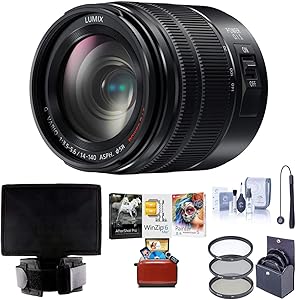
Panasonic 14-140mm f/3.5-5.6 II Lumix Telephoto Zoom Lens
The Panasonic 14-140mm f/3.5-5.6 II offers a massive 10x zoom range with image stabilization in a weather-sealed Micro Four Thirds package.
View price on Amazon
Affiliate Disclosure: As an Amazon Associate, Studio Supplies earns from qualifying purchases made through links on this page, at no additional cost to you. This helps support our editorial team.
Notice a mistake? Let Us Know
Overview
Capture Every Moment with the Versatile Panasonic Lumix G Vario 14-140mm Lens
Expand your creative possibilities with the Panasonic Lumix G Vario 14-140mm lens. Designed for Micro Four Thirds mirrorless cameras, this telephoto zoom lens offers a wide range of focal lengths, from wide-angle to telephoto, along with image stabilization and a splash/dust-resistant design. This bundle includes a filter kit, lens shade, and Mac software to enhance your photography experience.
- Mount: Micro Four Thirds
- Focal Length: 14-140mm (35mm Equivalent: 28-280mm)
- Aperture: f/3.5-5.6
- Image Stabilization: POWER O.I.S. (Optical Image Stabilizer)
- Construction: Splash/Dust-Resistant
- Focus System: Inner focus drive system with stepping motor
- AF System Compatibility: Compatible with sensor drives at max. 240 fps
Frequently Asked Questions
What is the 35mm equivalent focal length range of this lens?
On a Micro Four Thirds body, the 14-140mm translates to a 28-280mm equivalent, covering everything from wide-angle landscapes to distant telephoto subjects in a single lens.
Does this lens have built-in image stabilization?
Yes, it features Panasonic's POWER O.I.S. (Optical Image Stabilizer), which helps reduce blur from camera shake, especially at the longer telephoto end.
Is the Panasonic 14-140mm II weather-sealed?
It has a splash and dust-resistant construction, making it suitable for shooting in light rain or dusty conditions when paired with a weather-sealed camera body.
What autofocus system does this lens use?
It uses an inner focus drive system with a stepping motor, which provides quiet and smooth autofocus performance — particularly useful during video recording.
What accessories are included in this bundle?
This bundle includes a filter kit, lens shade, and Mac software in addition to the lens itself.
Related Products


