



Peavey
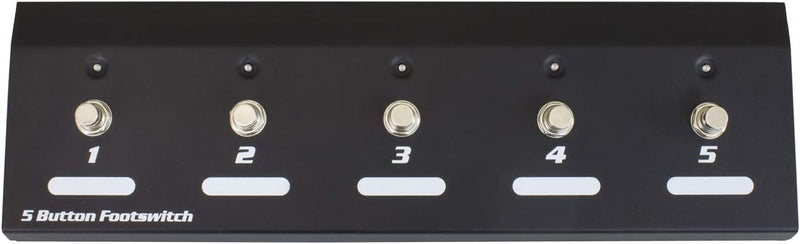
Peavey 03025630 5-Button MIDI Footswitch Controller
Hands-free preset switching for Peavey's Butcher, MiniMEGA, and XR-AT — five buttons and 25 feet of cable put full MIDI control under your feet on stage.
$76.99*$119.99Save 35%
Check availability
*Price sourced from Amazon.com. Last updated:Oct 24, 2026.Price and availability are subject to change — details.
Affiliate Disclosure: As an Amazon Associate, Studio Supplies earns from qualifying purchases made through links on this page, at no additional cost to you. This helps support our editorial team.
Notice a mistake? Let Us Know
Overview
Key Features
Use with Butcher, MiniMEGA and XR-AT
Includes 25' cable
Specifications
Number of Buttons
5
Compatible Devices
Peavey Butcher, MiniMEGA, XR-AT
Cable Length
25 feet (included)
Connection Type
Proprietary Peavey footswitch jack
Power Required
None (passive)
Frequently Asked Questions
Which Peavey amplifiers and devices is this footswitch specifically designed to work with?
The 03025630 is validated for use with three specific Peavey products: the Butcher amplifier, the MiniMEGA bass amplifier, and the XR-AT powered mixer. It is not a universal MIDI footswitch — it uses Peavey's proprietary control protocol over the included cable, and it will not function correctly with arbitrary MIDI devices or other manufacturers' amplifiers.
Does this footswitch transmit standard MIDI messages over a 5-pin DIN connection?
No. Despite being described as a MIDI footswitch, the 03025630 connects via the included 25-foot cable to a dedicated footswitch jack on compatible Peavey units — not a standard 5-pin MIDI DIN port. It is not compatible with generic MIDI interfaces, MIDI merge boxes, or DAW MIDI inputs without Peavey-specific hardware in the chain.
What can each of the five buttons control on compatible Peavey units?
Button function depends on the connected device. On the Butcher, buttons typically access channel switching and effects loop engagement. On the MiniMEGA, they control amplifier channels and settings. On the XR-AT, they switch presets and scenes. Consult your specific device's manual for the button mapping, as assignments are defined by the host unit, not the footswitch.
Is the 25-foot cable detachable or hardwired?
The 25-foot cable is included with the unit. Based on the product description, cable configuration should be verified against the physical unit — users performing in larger venues or with complex stage layouts should measure their stage depth against the 25-foot run to ensure it reaches from the amp to the performance position.
Can this footswitch be used at the front of house position or only at the performer's position?
The 25-foot cable length defines the operational radius. It is designed for performer use at stage position relative to the amplifier — not for front-of-house remote operation. For remote control from a mixing position, a different control solution would be required.
Related Products


