



Peavey
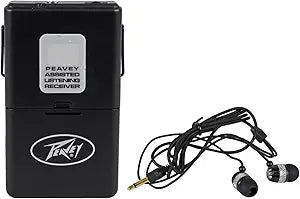
Peavey 4334427503 ALSR 72.1 Mhz Assisted Listening Receiver
★★★★★
The Peavey ALSR 72.1 MHz receiver delivers clear assisted listening in a lightweight, battery-powered body pack with simple volume control.
$49.99*
Check availability
*Price sourced from Amazon.com. Last updated:Jul 14, 2026.Price and availability are subject to change.
Affiliate Disclosure: Studio Supplies may earn a commission from qualifying purchases made through links on this page, at no additional cost to you. This helps support our editorial team.
Notice a mistake? Let Us Know
Overview
Specifications
Brand
Peavey
Model
ALSR (4334427503)
Frequency
72.1 MHz (72–76 MHz hearing aid band)
Frequency Stability
±0.005% over 0–50°C
Controls
VOLUME/ON-OFF combination wheel
Audio Output
250 mW max into 16Ω
Headphone Connector
3.5mm mini jack
Sensitivity
2 µV for 12 dB SINAD
Mute Threshold
8–10 µV, min. 50 dB S/N ratio
Power
2x AA batteries
Battery Life
17–20 hours (alkaline)
Dimensions
110 x 60 x 20 mm
Weight
2.75 oz (80g) without batteries
Included Accessories
Mini binaural headphones
Pros & Cons
👍 Pros
- Long battery life of 17 to 20 hours on two standard AA batteries reduces the need for frequent changes during events
- Very lightweight at only 2.75 oz without batteries, making it comfortable to wear for extended periods
- Battery life of 17–20 hours on two AA batteries means it can last through multiple events without replacement
- Crystal-referenced phase loop synthesizer ensures stable frequency reception with minimal drift
- Compact, lightweight body pack at just 2.75 oz without batteries is comfortable to carry or clip on
- Crystal-referenced phase loop synthesizer provides stable, drift-free frequency reception
- Simple single-dial operation for power and volume makes it accessible for users of all ages
- Combined volume and on/off control wheel provides simple, one-handed operation
- Integrated squelch circuit automatically mutes output when the signal is too weak, preventing static bursts
👎 Cons
- Operates on a single fixed frequency of 72.1 MHz with no ability to switch channels
- Operates on a single fixed frequency of 72.1 MHz, offering no channel selection if interference is present
- Requires a compatible Peavey transmitter that is not included, adding to the total system cost
- Headphone cable doubles as the antenna, meaning reception quality can vary with cable positioning
- The 3.5mm mini jack limits headphone compatibility to wired models only
- The 3.5mm headphone output and included mini binaural headphones may not suit users who prefer custom earpieces
- Audio output of 250 mW max into 16 ohms limits compatibility with higher-impedance headphones
- Requires a compatible 72.1 MHz transmitter, which is sold separately
Frequently Asked Questions
What frequency does the Peavey ALSR receiver operate on?
The ALSR operates on a single frequency of 72.1 MHz within the 72–76 MHz hearing aid band, with frequency stability controlled by a phase loop synthesizer locked to a crystal reference for consistent reception.
How long do the batteries last in the Peavey ALSR receiver?
With two AA alkaline batteries, the receiver provides approximately 17 to 20 hours of continuous use.
What type of headphones does the Peavey ALSR receiver use?
It comes with mini binaural headphones that connect via a 3.5mm mini jack. The headphone cable also serves as the antenna for receiving the signal.
What type of headphones does the Peavey ALSR use?
The unit includes mini binaural headphones that connect via a 3.5mm mini jack. The headphone cable also functions as the receiver's antenna.
How long does the battery last on the Peavey ALSR?
The receiver runs on two AA batteries and provides 17 to 20 hours of use with alkaline batteries, making it practical for extended events or multi-day use between battery changes.
What frequency does this assisted listening receiver operate on?
It operates on 72.1 MHz within the 72–76 MHz hearing aid band, with frequency stability controlled by a phase loop synthesizer locked to a crystal reference for consistent reception.
How do I turn the Peavey ALSR receiver on and adjust volume?
It uses a single combination VOLUME/ON-OFF wheel, so turning the dial powers the unit on and adjusts the listening volume. An LED power indicator confirms when the unit is active.
What is the audio output power of the ALSR receiver?
The ALSR delivers a maximum audio output of 250 mW into 16 ohms, which is sufficient for clear listening through the included headphones in typical assisted listening environments.
What does the squelch feature do on this receiver?
The squelch circuit mutes audio when the received signal is too weak (below 8–10 µV), preventing static and noise from reaching the listener when the transmitter signal drops out.
Does this receiver require a separate transmitter?
Yes, the ALSR is a receiver body pack only. It is designed to work as part of Peavey's 72.1 MHz assisted listening system and requires a compatible transmitter, sold separately.
Related Products


