



Pioneer DJ
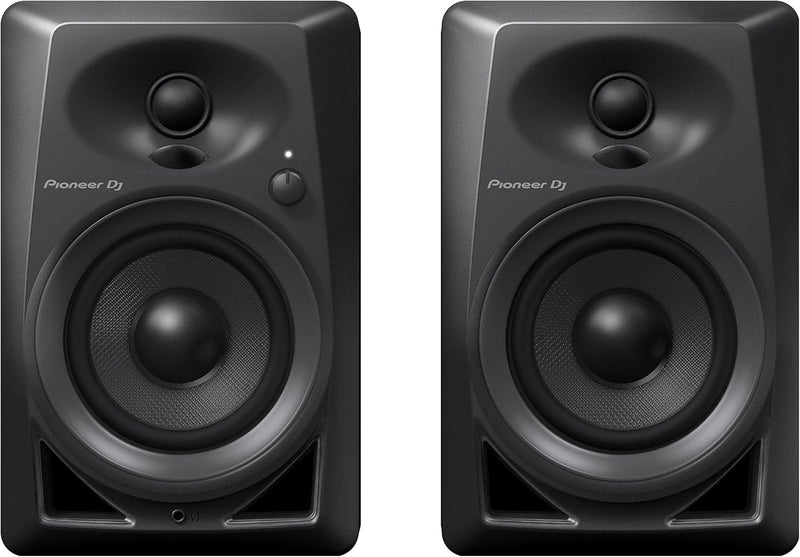
Pioneer DJ DM-40 21W Active Monitor Speakers (Pair)
146 x 2278.7 in8.3 in21W6 lbs
Compact desktop monitors with a surprisingly full low end — built for DJ practice, bedroom production, and nearfield listening.
$179.00*
Check availability
*Price sourced from Amazon.com. Last updated:Aug 29, 2026.Price and availability are subject to change — details.
Affiliate Disclosure: As an Amazon Associate, Studio Supplies earns from qualifying purchases made through links on this page, at no additional cost to you. This helps support our editorial team.
Notice a mistake? Let Us Know
Overview
Key Features
The compact DM-40 desktop monitors bring excellent audio quality to your home setup. They inherit the best from our professional S-DJX series and Pro Audio speakers, including a front-loaded bass reflex system for a rich, tight bass and DECO* technology for a wider reach and sweet spot. All these features are combined in a compact design making the DM-40 the perfect match for DJing, producing and simply enjoying music at home. The DM-40 speakers are sold as a pair. *Diffusion Effectual Convexity by Olson Specs: Type: 2-way bass reflex, active monitor speakers Tweeter: ¾-inch Soft Dome Woofer: 4-inch Fiberglass What's in the box: DM-40 x 2, Power cord, 2 m speaker cable (for left/right channel connection), Audio converter cable (3.5 mm stereo mini plug to RCA), Bottom cushion x 8, Operating instructions Dimensions: Left ch: 146 x 227 x 223 mm (5.7 x 8.9 x 8.7 in.) Right ch: 146 x 227 x 210 mm (5.7 x 8.9 x 8.3 in.) Weight: Left ch: 2.7 kg (6 lbs.) Right ch: 2.2 kg (4.8 lbs.) Amplifier Output: Class A/B amp: 2 x 21 W / 4 Ω Frequency Range: 70 - 30000 Hz Impedance: 10 kΩ Inputs: 1 LINE (RCA), 1 LINE (Mini-jack) Outputs: 1 HEADPHONE MONITOR (Mini-jack)
Specifications
Brand
Pioneer DJ
Model
DM-40
Type
2-way bass reflex, active monitor speakers
Tweeter
¾-inch Soft Dome
Woofer
4-inch Fiberglass
Amplifier
Class A/B, 2 x 21 W / 4 Ω
Frequency Range
70 – 30,000 Hz
Impedance
10 kΩ
Inputs
1 LINE (RCA), 1 LINE (3.5mm Mini-jack)
Outputs
1 Headphone Monitor (3.5mm Mini-jack)
Dimensions (Left)
146 x 227 x 223 mm (5.7 x 8.9 x 8.7 in.)
Dimensions (Right)
146 x 227 x 210 mm (5.7 x 8.9 x 8.3 in.)
Weight (Left)
2.7 kg (6 lbs.)
Weight (Right)
2.2 kg (4.8 lbs.)
Frequently Asked Questions
Do the DM-40s require a separate amplifier or audio interface to drive them?
No — these are active (powered) monitors with a built-in Class A/B amplifier delivering 21 watts per channel, so they connect directly to any line-level source without external amplification.
What inputs does the DM-40 support and can I connect both a DJ controller and a laptop simultaneously?
The DM-40 provides one RCA line input and one 3.5mm mini-jack input, both active — you can connect a DJ controller via RCA and a laptop via the mini-jack and switch between sources without re-cabling.
How does the bass response hold up without a subwoofer given the 4-inch woofer size?
The front-loaded bass reflex design extends usable low end down to 70 Hz, which delivers audible kick and bass presence for nearfield listening, but you'll lose sub-bass content below that — a subwoofer fills the gap if you need full-range monitoring.
Is the headphone output on the DM-40 usable for late-night monitoring?
The front-panel mini-jack headphone output is convenient for quick reference checks and late-night sessions, though it's driven from the monitor's amp and won't match the output quality of a dedicated headphone amplifier.
How far apart should I place the DM-40s for the best stereo image?
Pioneer's DECO (Diffusion Effectual Convexity by Olson) waveguide is designed to widen the sweet spot, so these are forgiving with placement — a standard nearfield triangle with 3–4 feet between speakers works well on a desk.
Related Products


