



Polaroid
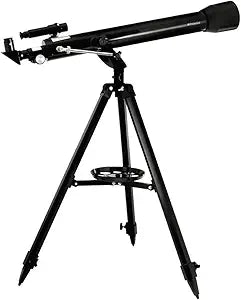
Polaroid 168X/525X Refractor Telescope Tripod Kit
f/12
Step up to 175x magnification and moon-filter lunar views with a 700mm refractor that's ready to set up in your backyard tonight.
View price on Amazon
Affiliate Disclosure: As an Amazon Associate, Studio Supplies earns from qualifying purchases made through links on this page, at no additional cost to you. This helps support our editorial team.
Notice a mistake? Let Us Know
Overview
Key Features
60mm Refractor-Style OTA
Manual Alt-Azimuth Mount
175x and 56x Eyepieces
Moon Filter for Safe Lunar Viewing
700mm Focal Length, f/12 Focal Ratio
Specifications
Optical Tube Type
60mm Refractor-Style OTA
Mount Type
Manual Alt-Azimuth Mount
Eyepiece 1 Magnification
175x
Eyepiece 2 Magnification
56x
Included Filters
Moon Filter
Focal Length
700mm
Focal Ratio
f/12
Frequently Asked Questions
What can I realistically see with the 168X/525X at 175x magnification?
At 175x you'll resolve lunar craters, maria, and mountain ridges in sharp detail. The moon filter included in the kit is essential at that power — without it, the brightness is uncomfortable and washes out surface contrast. Planets like Saturn and Jupiter are also viable targets, showing rings and cloud bands under good seeing conditions.
What do the 168X and 525X designations in the name actually mean?
They reference the two available magnification levels from the included eyepieces — approximately 56x and 175x respectively, derived from the 700mm focal length paired with each eyepiece. The designations in the product name appear to refer to the model's magnification range, not separate model numbers.
Does the alt-azimuth mount track objects as they move across the sky?
No — the manual alt-azimuth mount requires you to nudge the telescope by hand to keep objects centered as Earth's rotation moves them out of the field of view. At 175x, objects drift through the field noticeably quickly, which is a normal limitation of non-motorized mounts at high power.
Is this telescope appropriate for a first-time user?
Yes, with realistic expectations. The alt-azimuth mount is simpler to learn than an equatorial, and the two eyepieces let you start wide at 56x to find objects before switching to 175x for detail. The full-size adjustable tripod provides stable footing for a backyard setup.
How portable is this telescope for travel or dark-sky outings?
The 60mm OTA is compact and lightweight. The tripod breaks down for transport. It's manageable for a short drive to a dark site, though it's not a grab-and-go instrument in the way a compact refractor or Dobsonian might be — tripod setup adds a few minutes.
Related Products


