
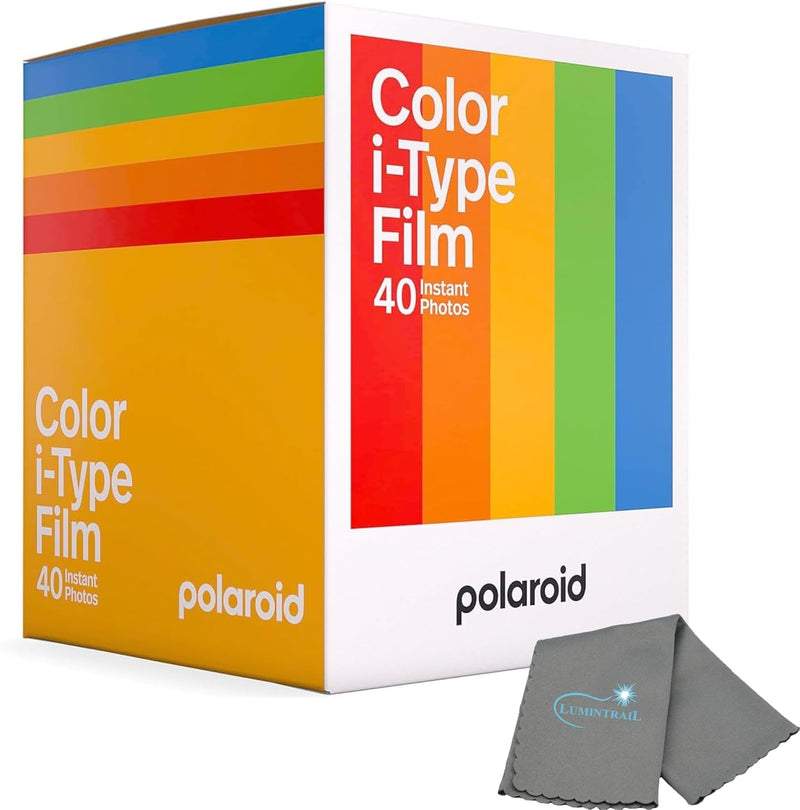


Polaroid 6010 Instant Color Film i-Type - 40 Photos
A 40-shot value pack of Polaroid i-Type instant color film with updated chemistry for richer tones, sharper contrast, and the iconic white frame.
*Price sourced from Amazon.com. Last updated:Aug 30, 2026.Price and availability are subject to change — details.
Notice a mistake? Let Us Know
Overview
Key Features
UPDATED CLASSIC - The classic Polaroid film is back with a new formula exclusively for I-Type cameras with 40 classic iconic white framed photos.
NEW CLASSIC - I-Type film uses Polaroid's latest chemistry to provide richer colors, tones, and contrast. I-Type film is not compatible with vintage Polaroid cameras.
LIGHT IT UP - Polaroid instant film loves light. The more light in your shot, the better your photo will turn out. Always shoot in bright light or use the camera flash.
DEVELOP - Photos will appear blank at first. Photos develop within 15 minutes. Shield photos from the light and place them face down as they develop.
CREATE - Every photo you create is rich, textured, and unique. Unpredictable, imperfect, and impossible to reproduce, just like you.
Specifications
Frequently Asked Questions
Related Products


