

Polaroid
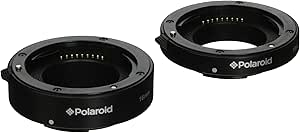
Polaroid PLEXTCM Auto Focus Macro Extension Tube Canon M
Turn any Canon M-mount lens into a macro optic — these autofocus extension tubes let you get tack-sharp, frame-filling shots of small subjects without buying a dedicated macro lens.
$34.64*
Check availability
*Price sourced from Amazon.com. Last updated:Oct 24, 2026.Price and availability are subject to change — details.
Affiliate Disclosure: As an Amazon Associate, Studio Supplies earns from qualifying purchases made through links on this page, at no additional cost to you. This helps support our editorial team.
Notice a mistake? Let Us Know
Overview
Key Features
The Extension Tubes Enable Your Lens To Focus Closer Than Its Normal Minimum Focusing Distance Resulting In The Magnification Of The Subject
Includes Electrial Contacts To Maintain Auto Focus And Auto Exposure Capabilities
Tube Sizes: 10mm, 16mm
Specifications
Compatibility
Canon M Digital Camera Mount
Tube Lengths
10mm, 16mm
Possible Extension Combinations
7 (individual and combined)
Electrical Contacts
Yes — autofocus and auto-exposure maintained
Glass Elements
None
Autofocus Support
Yes
Auto Exposure Support
Yes
Frequently Asked Questions
Do these tubes preserve autofocus, or do I need to focus manually?
Autofocus is preserved. The tubes include electrical contacts that pass AF and AE signals through to the lens, so your Canon M-mount lens retains autofocus and automatic exposure — a meaningful advantage over cheaper tubes that force manual focus and exposure.
What magnification do I get from the 10mm and 16mm tubes?
Magnification depends on the focal length of the lens you attach — shorter focal lengths gain more magnification from the same tube length. The two tubes can be used individually (10mm or 16mm) or combined for seven distinct extension lengths, giving you a range of working magnifications from the same kit.
Can I use these with any lens in the Canon M system?
They're compatible with Canon M-mount lenses. The critical factor is minimum focusing distance — lenses with longer minimum focusing distances gain more usable magnification from extension tubes. Very wide lenses may struggle to achieve a flat field at close focus distances.
Does adding these tubes affect exposure?
Extending a lens reduces the amount of light reaching the sensor, which requires exposure compensation. Because these tubes maintain the automatic exposure connection, the camera meters and compensates automatically — you don't need to calculate exposure manually.
Do these tubes work with the Canon M's in-body image stabilization?
Lens-based optical stabilization is passed through via the electrical contacts. The effect of IS at macro distances is less impactful than at normal shooting distances — at high magnification, even mirror-up technique matters more than stabilization. A tripod is strongly recommended for close macro work.
Related Products


