



PreSonus
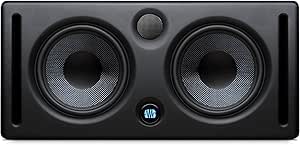
PreSonus Eris E66 MTM Dual 6" Powered Studio Monitor
★★★★★
140WXLR
The MTM sweet spot you've been chasing: PreSonus Eris E66 delivers wide-field imaging and fatigue-free mids for long studio sessions.
$319.99*
Check availability
*Price sourced from Amazon.com. Last updated:Jul 14, 2026.Price and availability are subject to change.
Affiliate Disclosure: Studio Supplies may earn a commission from qualifying purchases made through links on this page, at no additional cost to you. This helps support our editorial team.
Notice a mistake? Let Us Know
Overview
Key Features
Nested MTM (D’Appolito) design with dual woven composite drivers provides smooth on- and off-axis response with more dynamic output than conventional two-way studio monitor configurations.
MTM (D’Appolito) design minimizes phase displacement and leads to improved spatial resolution and a much wider sweet spot.
Dual 6.5-inch, custom-woven Kevlar LF/midrange drivers produce dynamic, size-defying bass output and detailed mids.
1.25-inch, silk-dome HF driver ensures smooth high-frequency performance that is never fatiguing to the ears.
Includes Studio One Prime and Studio Magic plug-in suite, over $1000 USD worth of music production software.
Unique design supports vertical and horizontal loudspeaker placement to fit into any mix environment.
Acoustic tuning controls help to compensate for room anomalies, providing a consistent frequency response customized for your mix environment.
Balanced XLR, balanced ¼-inch TRS, and unbalanced RCA inputs provide flexibility for seamless integration into any environment.
140W Class A/B bi-amplification for an open, clear sound.
Continuously variable HF and MF controls (-6 to +6 dB) help further fine-tune the sound for the space you’re in.
Specifications
Design
Nested MTM (D'Appolito) dual woven composite
LF/Midrange Drivers
Dual 6.5-inch custom-woven Kevlar
HF Driver
1.25-inch silk-dome
Amplification
140W Class A/B bi-amplified
Inputs
Balanced XLR, balanced ¼" TRS, unbalanced RCA
HF Control
Continuously variable, -6 to +6 dB
MF Control
Continuously variable, -6 to +6 dB
Placement
Vertical or horizontal
Pros & Cons
👍 Pros
- Dual 6.5" Kevlar woofers produce a low-end authority and midrange body that single-woofer monitors in this size class simply can't match
- MTM configuration delivers a wide, stable stereo image that holds together across a broad listening arc — essential when clients are seated off-axis
- 1.25" silk-dome tweeter renders high frequencies with smooth detail, never adding artificial brightness or hash to mixes
- 140W Class A/B bi-amplification provides clean headroom with fast transient response — kick drums and snare attacks hit accurately without smearing
- Acoustic tuning controls plus continuously variable HF/MF trim make the E66 adaptable to imperfect rooms without needing external EQ
👎 Cons
- The MTM cabinet is physically larger and heavier than conventional two-way monitors of comparable driver size — a real consideration for home studio desktops with limited depth
- No built-in headphone output or digital inputs limits direct DAW integration compared to newer monitor/interface hybrid designs
- The ±6 dB EQ controls, while useful, interact in ways that can color the sound if over-applied — requires a calibrated reference or measurement mic to use confidently
- RCA input alongside balanced XLR/TRS is convenient but can introduce noise if used with consumer-grade sources without a proper impedance match
Frequently Asked Questions
How wide is the sweet spot on the Eris E66 compared to conventional two-way monitors?
The MTM (D'Appolito) configuration significantly widens the listening window by aligning the dual 6.5" woofers symmetrically around the tweeter, minimizing lobing and phase displacement. You'll find coherent stereo imaging several feet off-center — useful in mix rooms where multiple engineers or clients are referencing simultaneously.
Does the Eris E66 require any room treatment to sound accurate?
The E66 includes continuously variable HF and MF controls (±6 dB each) plus additional acoustic tuning switches designed to compensate for boundary effects like placement near walls. These won't replace proper acoustic treatment, but they give you meaningful tools to tame a reflective room before you touch the acoustics.
What gain structure should I use when connecting the Eris E66 to a typical audio interface?
Set your interface outputs to around -10 to -14 dBFS for normal listening levels, keeping the E66's volume control at roughly 12 o'clock. This keeps the 140W Class A/B amplifier operating in its clean range with plenty of headroom for transient peaks — you don't want to clip the input before the amp even works.
Can the Eris E66 be used horizontally in a soffit or console-top placement?
Yes — one of the more practical design decisions here. The cabinet supports both vertical and horizontal orientation without disrupting the MTM driver alignment, making it adaptable to control rooms where vertical height is limited or where monitors are recessed into a meter bridge.
Does the 1.25" silk-dome tweeter cause listening fatigue on extended sessions?
Silk domes inherently roll off more gently than metal tweeters, producing a smoother top-end that doesn't spike on sibilance or cymbal transients. The E66 is specifically voiced to avoid that fatiguing brightness — most engineers report comfortable 8–10 hour sessions without ear fatigue.
Related Products


