



QSC
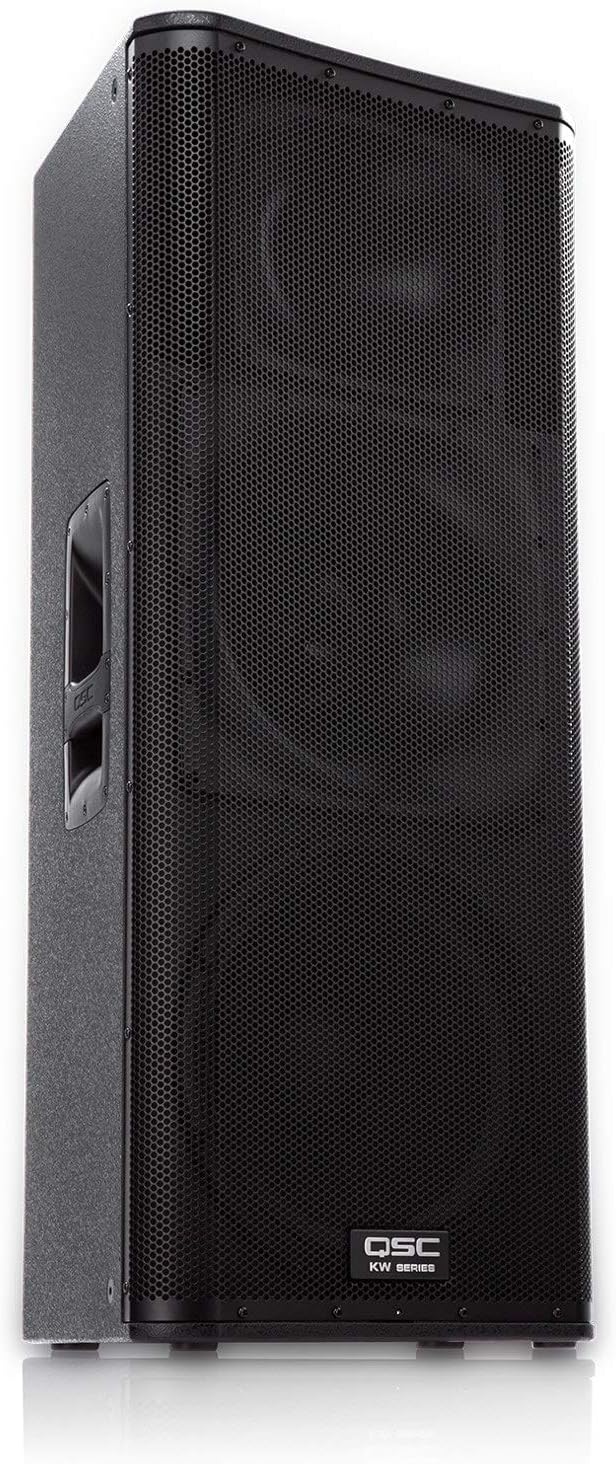
QSC KW153 15" 1000W 3-Way Active Loudspeaker
1000WXLR
Three-way clarity with 1000 watts of clean headroom — the QSC KW153 is the workhorse loudspeaker that handles everything from club stages to corporate ballrooms.
$2,099.00*
Check availability
*Price sourced from Amazon.com. Last updated:Aug 27, 2026.Price and availability are subject to change — details.
Affiliate Disclosure: As an Amazon Associate, Studio Supplies earns from qualifying purchases made through links on this page, at no additional cost to you. This helps support our editorial team.
Notice a mistake? Let Us Know
Overview
Key Features
1000-watt Class D powered speaker (2 x 500 W)
Two combination XLR-1/4" TRS inputs and RCA inputs with direct outputs
Four-position mic/line gain knobs
Mix up to three audio sources internally and send sum to balanced output for daisy-chaining
QSC's sophisticated DSP, including DEEP mode for extended bass response
Specifications
Type
3-Way Active PA Loudspeaker
Woofer Size
15"
Power
1000W Class D (2 × 500W)
Inputs
2× Combination XLR-1/4" TRS, RCA
Outputs
Balanced direct output (daisy-chain)
DSP
DEEP mode bass extension
Gain Control
Four-position mic/line gain knobs
Enclosure Material
Birch
Frequently Asked Questions
What does the 3-way design actually mean for how the KW153 sounds compared to a 2-way speaker?
A 3-way design adds a dedicated midrange driver, which means vocals, snare crack, and guitar presence live in their own acoustic space rather than being shared between the woofer and tweeter. The result is noticeably cleaner reproduction in the 500 Hz–3 kHz band — the zone where human voices and most instruments are most intelligible. In dense mixes, you hear it as less congestion and more definition on everything from spoken word to full-band reinforcement.
How does DEEP mode affect low-frequency performance and when should it be engaged?
DEEP mode is a DSP-driven bass extension algorithm built into the KW153's onboard processing. Engaged, it extends usable low-frequency output below the driver's natural rolloff, adding perceived weight and fullness to program material — particularly useful when running the KW153 without a dedicated subwoofer. For full-range playback of music or spoken word in smaller venues, DEEP mode fills in the bottom end; when paired with a dedicated sub, it's generally best left off to avoid low-frequency overlap.
Can the KW153 handle mixing multiple sources internally without an external mixer?
Yes. The KW153 accepts up to three audio sources simultaneously via its two combination XLR-1/4" TRS inputs and RCA inputs, and its onboard controls allow gain adjustment for each. The internal sum is then available at the balanced output for daisy-chaining additional speakers. This makes the KW153 usable as a standalone PA in simple speech reinforcement or background music applications without requiring an external console.
What is the gain staging workflow for the four-position mic/line gain knobs?
The four-position gain switches provide selectable sensitivity settings matching typical mic-level and line-level sources. For mic-level inputs from a dynamic or condenser mic, select the higher gain position; for line-level sources from a mixer or playback device, use the lower gain position. Proper gain staging here keeps the input stage out of compression and maximizes dynamic range through the Class D amplifier section.
Is the birch enclosure a meaningful acoustic choice or just a material note?
Birch is a deliberate acoustic choice. Its stiffness-to-weight ratio reduces enclosure resonance and panel flex that can color the low-midrange — the frequencies most susceptible to cabinet colorations. In a loud, high-SPL environment, a birch cabinet stays acoustically inert where cheaper MDF might add unwanted warmth or muddiness to the bottom of the speaker's range.
Related Products


