QSC

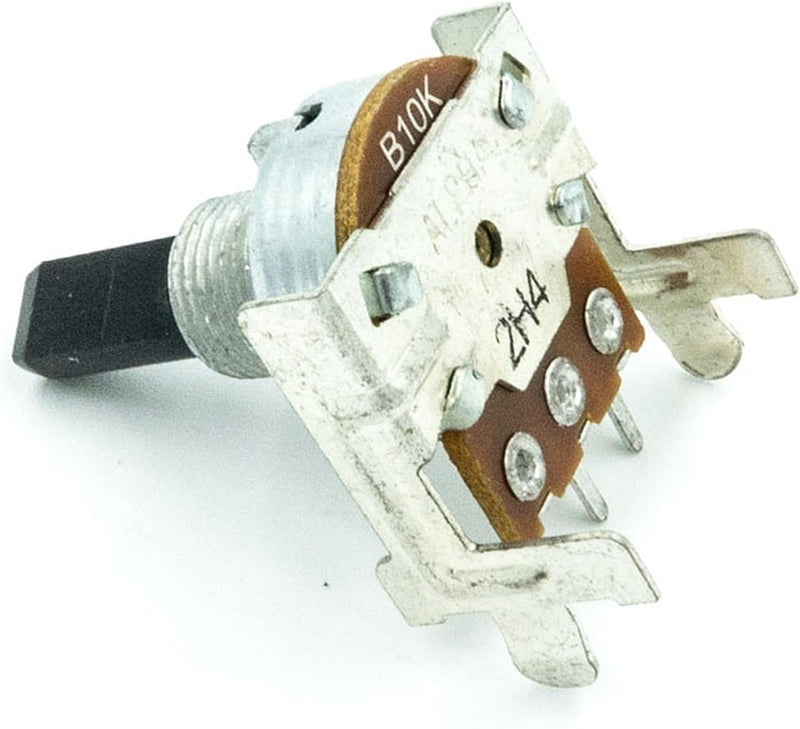
QSC PT-310006-GP Gain Pot for RMX850 Amplifier

OEM-spec gain potentiometer that restores precise level control to the RMX850's input stage — fix the taper, restore the channel.

Check availability
Affiliate Disclosure: Studio Supplies may earn a commission from qualifying purchases made through links on this page, at no additional cost to you. This helps support our editorial team.

Notice a mistake? Let Us Know

Overview

The QSC PT-310006-GP is a factory-specification replacement gain potentiometer for the RMX850 power amplifier's input sensitivity control. In the RMX850's signal path, the gain pot occupies the front end of each channel's input section, determining how much of the incoming signal enters the amplification stage. When the pot's resistive wiper track wears, contact becomes inconsistent — producing the characteristic crackling, dead spots, and channel-to-channel imbalance that indicate a failed gain control. This OEM replacement restores the original resistance taper, shaft geometry, and PCB footprint, ensuring the repaired channel's gain staging behavior matches the amplifier's circuit design specification exactly rather than introducing a substitute taper that alters the channel's sensitivity curve.

Replacing this component is a PCB-level service task: it requires chassis disassembly, through-hole desoldering of the original pot, board cleaning, and clean installation of the replacement. The QSC RMX850 service manual is the authoritative reference for disassembly sequence and reassembly torque — working without it increases the risk of collateral damage to adjacent board traces or connector housings. For audio engineers and technicians maintaining a fleet of RMX850 amplifiers in touring or installed sound environments, stocking this part reduces unit downtime to the repair interval rather than the lead time for a sourced replacement. At the cost of a single replacement pot, it is one of the highest-return maintenance investments available for restoring a functional amplifier to full specification.

Specifications

Component Type
Gain Potentiometer
Model
PT-310006-GP
Compatible Amplifier
QSC RMX850 Amplifier
Brand
QSC

Pros & Cons

👍 Pros

  • OEM-specification part ensures the gain control taper matches the original RMX850 circuit design — attenuation characteristics and tracking behavior are identical to the factory unit, maintaining consistent gain staging between channels
  • Direct PCB compatibility with the RMX850 eliminates the fitment research required when sourcing a third-party cross-reference pot of unknown shaft type, resistance value, and PCB footprint
  • Single-unit packaging allows targeted repair of one degraded channel without purchasing a multi-piece kit that includes parts not currently needed
  • Genuine QSC replacement restores the input sensitivity control that the RMX850's gain staging was designed around — critical for matched dual-channel performance where both channels must track identically
  • Repairing a functional gain pot extends the operational life of a proven amplifier platform rather than retiring the entire unit over a single worn passive component

👎 Cons

  • Single-unit packaging means a second order is required if both channels' pots are worn — or the adjacent channel will follow with similar wear shortly after the first replacement
  • Installation requires through-hole desoldering and soldering at the PCB level, plus RMX850 chassis disassembly — this is not a user-serviceable repair for anyone without prior electronics rework experience
  • No installation documentation, wiring diagram, or service notes are included — access to the RMX850 service manual from QSC is a prerequisite for safe disassembly and reassembly
  • A worn gain pot in an aging amplifier often signals broader component wear; replacing the pot may reveal that nearby PCB traces, connector contacts, or the pot's shaft bushing have also degraded under the same conditions
  • Compatibility is specific to the RMX850 model only — this part does not cross-reference to other QSC RMX series models without verification against QSC's official parts documentation

Frequently Asked Questions

The gain pot sits at the front end of its channel's input section and sets how much of the incoming signal is allowed into the amplification stage — it controls input sensitivity. A degraded wiper track produces audible artifacts: crackling, dead spots, channel imbalance, and noise that tracks precisely with the pot's rotational position.
Rotate the gain control slowly while the channel is active. If crackling, static, or level drop-outs correlate precisely with the pot's rotation angle and disappear at specific positions, the wiper track is degrading and the pot is the fault. If the fault occurs at a fixed level regardless of pot position, the problem is elsewhere in the amplifier circuit and replacing this pot will not resolve it.
This part is validated specifically for the RMX850. QSC uses different component specifications across the RMX series. Verify compatibility with QSC's parts documentation or technical support before installing this pot in any other RMX model — part numbers are model-specific.
PCB-level through-hole soldering is required. You will need a soldering iron, desoldering braid or pump, the RMX850 service manual for the correct disassembly sequence, and prior experience working on amplifier PCBs. Without soldering experience, a qualified technician should perform the repair to avoid damaging adjacent PCB traces or components.
Sometimes. Deoxit D5 or equivalent contact cleaner applied through the pot's vent holes can temporarily restore smooth operation on mildly degraded pots where surface oxidation is the cause. If the resistive wiper track has physically worn through, contact cleaner cannot restore function and pot replacement is the correct path forward.