



Radial Engineering
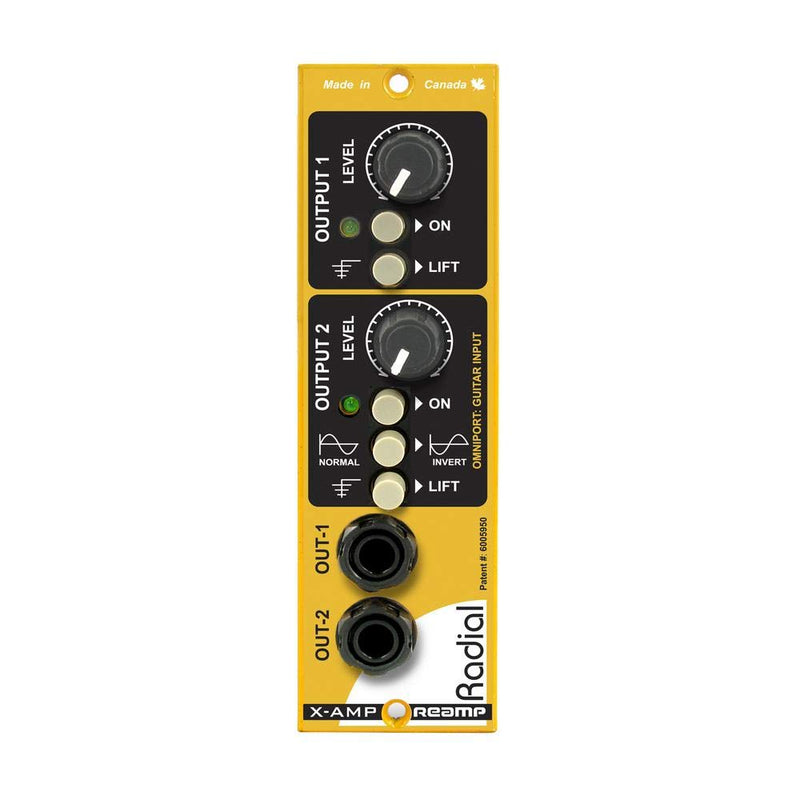
Radial Engineering R700-0130 X-Amp 500 Re-amping Module
Convert line-level tracks back to guitar-amp impedance with Radial's transformer-isolated, Class-A X-Amp 500 re-amping module.
$359.99*
View on Amazon
✓ In Stock on Amazon.com
*Price sourced from Amazon.com. Last updated:Aug 27, 2026.Price and availability are subject to change — details.
Affiliate Disclosure: As an Amazon Associate, Studio Supplies earns from qualifying purchases made through links on this page, at no additional cost to you. This helps support our editorial team.
Notice a mistake? Let Us Know
Overview
Key Features
Re-amping Module for 500 Series
Specifications
Brand
Radial Engineering
Model
R700-0130 (X-Amp 500)
Type
Active Re-amping Module
Format
500 Series
Circuit Design
100% Discrete Class A
Outputs
Two Class A transformer-isolated
Output Isolation
Transformer isolated (eliminates hum and buzz)
Cable Drive
Up to 50 feet of hi-Z cable
Controls
Front-panel jacks and controls
Frequently Asked Questions
What does re-amping mean and how does the X-Amp 500 facilitate it?
Re-amping is the process of sending a pre-recorded dry guitar signal back out through a physical amplifier and effects to capture a new tone. The X-Amp 500 converts the line-level output from your DAW to the correct high-impedance signal that guitar amps and pedals expect, allowing you to experiment with tones after the initial recording.
Does the X-Amp 500 require a 500 Series rack to operate?
Yes, the X-Amp 500 is a 500 Series format module and must be installed in a compatible 500 Series chassis to receive power and connectivity.
How many amps can I feed simultaneously from the X-Amp 500?
The module has two Class A transformer-isolated outputs, so you can drive two separate guitar amps or signal chains at the same time.
How does the transformer isolation help in a re-amping setup?
The transformer-isolated outputs eliminate ground loops between your recording interface and guitar amplifiers, preventing the hum and buzz that commonly occur when connecting studio equipment to amp inputs.
How long of a cable run can the X-Amp 500 drive?
The X-Amp 500 can drive up to 50 feet of high-impedance cable from each output without significant signal degradation.
Related Products


