



Radial Engineering
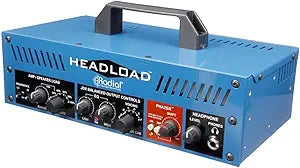
Radial Engineering R800 7058 Headload Guitar Amp Load Box 8 Ohm
Drive your amp into full saturation and capture every harmonic at any volume — the Headload puts your amp's sweet spot on tap in any room.
$1,994.49*
Check availability
*Price sourced from Amazon.com. Last updated:Oct 25, 2026.Price and availability are subject to change — details.
Affiliate Disclosure: As an Amazon Associate, Studio Supplies earns from qualifying purchases made through links on this page, at no additional cost to you. This helps support our editorial team.
Notice a mistake? Let Us Know
Overview
Key Features
Combination speaker attenuator and simulator
Safely handles up to 130 watts RMS (180 peak
Radial JDX Reactor and Phazer for direct recording
Delivers great tone from your amp at low volume
Specifications
Type
Guitar Amp Load Box / Attenuator
Impedance
8 Ohm
Power Handling
130W RMS continuous / 180W peak
Attenuation
6-position rotary switch (100% to ~20%) + trim control
Direct Box
Radial JDX Reactor (integrated)
Phase Adjustment
Radial Phazer, 0–360 degrees continuous
EQ
2-band shelving EQ (JDX output)
Cabinet Emulation
6-position voicing switch
Cooling
Fan-cooled
Brand
Radial Engineering
Model
R800 7058
Frequently Asked Questions
What impedance does the Headload operate at, and does it need to match my amp's output?
The Headload is rated at 8 ohms. Your amplifier's output impedance must match — connecting a 4-ohm or 16-ohm head without proper matching can stress the output transformer. Verify your amp's speaker output impedance before patching into the Headload.
How much power can the Headload safely absorb continuously?
130 watts RMS continuous, with a 180-watt peak tolerance. This covers most combo and head amplifiers in live and studio use, including high-powered 100-watt heads, but the fan-cooled chassis is doing real thermal work at sustained full output — monitor operating temperatures in long sessions.
Does the built-in JDX Reactor output require phantom power or an external power source?
The Headload requires a standard IEC power connection — it is an active device. The JDX Reactor direct output is powered by the unit itself; no external DI box or phantom power from your console is needed for the direct signal.
What does the Phazer actually do for my direct signal?
The Phazer provides 0–360 degrees of continuous phase adjustment on the JDX direct output. When blending the JDX signal with a microphone on the cabinet, phase cancellation between the two sources can thin out your tone. The Phazer lets you time-align them by ear until the combined signal is full and coherent.
Can the Headload be used purely as an attenuator without using the direct output?
Yes. The 6-position rotary attenuator (scaling from full output down to approximately 20%) and fine-trim control operate independently. You can run the Headload purely as a passive-style power attenuator feeding a real cabinet while ignoring the JDX output entirely.
Related Products


