

Radial Engineering
Radial Engineering R800 8015 J+4 Signal Level Driver
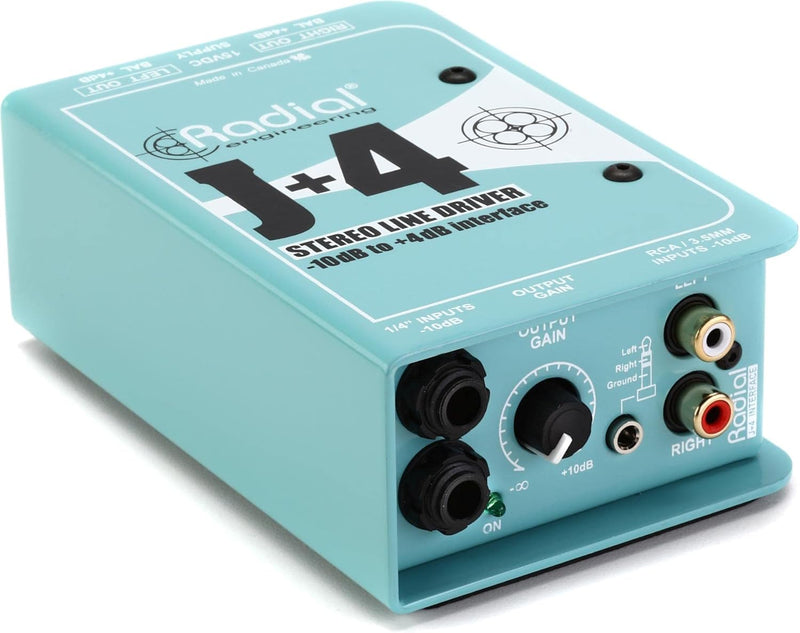
Optimize Signal Levels with the Radial J+4 Level Driver The Radial J+4 is a two-channel signal level driver designed to seamlessly interface pro audio equipment with low-level devices. This unit boosts signals from -10dB to +4dB, ensuring optimal signal integrity in recording studios, broadcast e...
$289.99*
View on Amazon
✓ In Stock on Amazon.com
*Price sourced from Amazon.com. Last updated:Aug 28, 2026.Price and availability are subject to change — details.
Affiliate Disclosure: As an Amazon Associate, Studio Supplies earns from qualifying purchases made through links on this page, at no additional cost to you. This helps support our editorial team.
Notice a mistake? Let Us Know
Overview
Optimize Signal Levels with the Radial J+4 Level Driver
The Radial J+4 is a two-channel signal level driver designed to seamlessly interface pro audio equipment with low-level devices. This unit boosts signals from -10dB to +4dB, ensuring optimal signal integrity in recording studios, broadcast environments, and live sound setups.
Specifications:
- Channels: 2
- Connectivity: 1/4" TRS, 1/8" TRS, RCA, XLR
- Input Impedance: Not Specified
- Output Impedance: Not Specified
- Frequency Response: Not Specified
- Total Harmonic Distortion: Not Specified
Key Features
Signal Driver with Level Matching from -10dB to +4dB
Specifications
Function
Signal Level Driver
Level Matching Range
-10dB to +4dB
Model Number
R800 8015 J+4
Frequently Asked Questions
What is the primary function of the Radial Engineering R800 8015 J+4?
Its primary function is a signal driver with the capability to perform level matching, adjusting audio signals from -10dB to +4dB.
What kind of signal level adjustments can this device make?
It can match signal levels, allowing for attenuation or boosting within a range from -10dB to +4dB.
Is this product intended for professional audio use?
Given its brand, Radial Engineering, and its specific signal processing function, it is designed for use in professional audio environments.
Does the Radial Engineering R800 8015 J+4 offer any other audio processing features?
Based on the provided features, its specific role is a signal driver with level matching; no other processing functions are mentioned.
Why would I need a signal level driver like the J+4?
A signal level driver helps ensure that audio signals are at optimal levels when moving between different pieces of equipment, preventing issues like noise or distortion due to mismatched levels.
Related Products


