



Razer
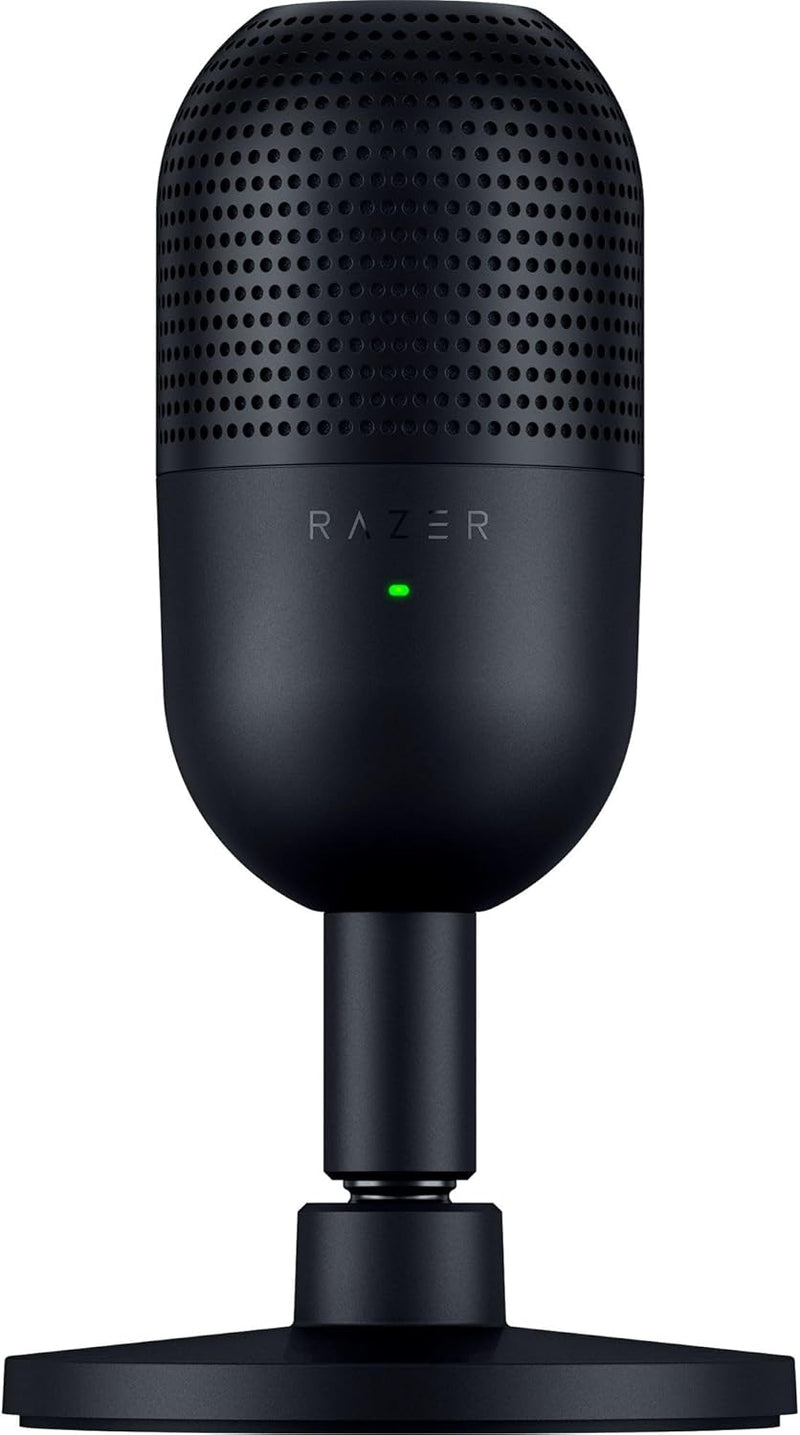
Razer RZ19-05050100-R3U1 Seiren V3 Mini USB Condenser Microphone
Ultra-compact USB condenser with supercardioid focus and tap-to-mute for clean podcast and streaming capture at your desk.
$33.99*$39.99Save 15%
View on Amazon
✓ In Stock on Amazon.com
*Price sourced from Amazon.com. Last updated:Aug 28, 2026.Price and availability are subject to change — details.
Affiliate Disclosure: As an Amazon Associate, Studio Supplies earns from qualifying purchases made through links on this page, at no additional cost to you. This helps support our editorial team.
Notice a mistake? Let Us Know
Overview
Specifications
Type
USB Condenser Microphone
Polar Pattern
Supercardioid
Connectivity
USB
Mute Control
Tap-to-Mute Capacitive Sensor with LED Indicator
Shock Absorption
Built-in Shock Absorber
Brand
Razer
Model
RZ19-05050100-R3U1 (Seiren V3 Mini)
Frequently Asked Questions
How does the supercardioid polar pattern on the Seiren V3 Mini affect background noise rejection?
A supercardioid pattern has a tighter pickup angle than standard cardioid, rejecting more off-axis sound from the sides. This means the V3 Mini captures less room noise, keyboard clatter, and fan hum compared to wider-pattern USB microphones, but it requires more precise positioning — you need to stay on-axis for consistent tonal quality.
Does the Seiren V3 Mini require any driver installation or specialized software to work with a DAW?
The V3 Mini operates as a plug-and-play USB audio device on Windows, macOS, and most Linux distributions with no driver installation needed. It will appear as a standard input device in any DAW, OBS, Discord, or streaming software. Razer's Synapse software is optional and provides additional EQ and gain control if desired.
What does the built-in shock absorber actually isolate against, and does it replace a full shock mount?
The internal shock absorber dampens vibrations transmitted through the desk surface — typing impacts, bumps, and low-frequency rumble. It reduces the need for an external shock mount in casual streaming and podcast setups, though for studio-critical recording where you need maximum isolation from heavy mechanical keyboard use or a vibration-prone desk, a dedicated boom arm with external shock mount will perform better.
How does the tap-to-mute function work, and does it introduce any noise into the signal?
The capacitive tap-to-mute sensor on top of the microphone silences the input with a touch and provides an LED indicator for mute status. Because it is a capacitive sensor rather than a mechanical switch, it does not produce an audible click or thump in the signal when activated — useful for muting during live streams without artifacts.
What is the sample rate and bit depth of the USB audio output?
The Seiren V3 Mini captures at up to 24-bit/48 kHz over USB, which is the standard broadcast and streaming resolution. This provides adequate dynamic range and frequency response for voice capture, though it does not support higher sample rates used in music production recording.
Related Products


