

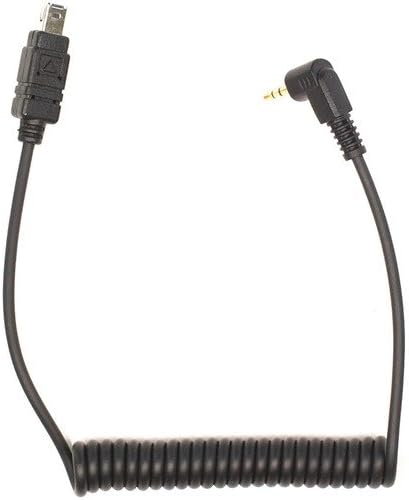
Rhino Camera Gear
Rhino Camera Shutter Cable for Nikon DC-2 DSLRs
Lock in tack-sharp long exposures and precise remote shutter control with a cable built specifically for your Nikon's DC-2 port.
$4.99*
Check availability
*Price sourced from Amazon.com. Last updated:Oct 07, 2026.Price and availability are subject to change — details.
Affiliate Disclosure: As an Amazon Associate, Studio Supplies earns from qualifying purchases made through links on this page, at no additional cost to you. This helps support our editorial team.
Notice a mistake? Let Us Know
Overview
Specifications
Compatibility
Nikon DC-2 DSLRs
Product Type
Shutter Cable
Frequently Asked Questions
Which Nikon bodies is this cable compatible with?
This cable is designed for the DC-2 shutter port found on Nikon Df, D90, D600, D610, D750, D7000, D7100, D7200, D3100, D3200, D3300, D5000, D5100, D5200, D5300, D5500, D5600, Coolpix P7700, P7800, and Coolpix A. Verify your body's port type before purchasing.
Can I use this cable for Bulb mode long exposures?
Yes — locking the shutter open in Bulb mode is one of the primary use cases. The cable allows you to trip and hold the shutter without touching the camera body, eliminating vibration during extended exposures like night sky or light painting work.
Does this cable work for time-lapse sequences?
For basic intervalometer-style time-lapse, you would need a controller that accepts this cable as an input. The cable itself is a passive trigger release — it connects your release device to the camera's DC-2 port and does not have built-in intervalometer functions.
How long is the cable, and is that enough working distance for tripod use?
The cable provides enough length for standard tripod work where you're standing just beside the camera. Check the listed cable length if you need to trigger from a greater distance — a wireless trigger may be preferable for multi-camera setups.
Will this cable introduce any shutter lag compared to pressing the button directly?
No — there is no electronic processing in the cable. It functions as a direct mechanical-electronic pass-through to the camera's shutter release circuit, so response is immediate.
Related Products


