
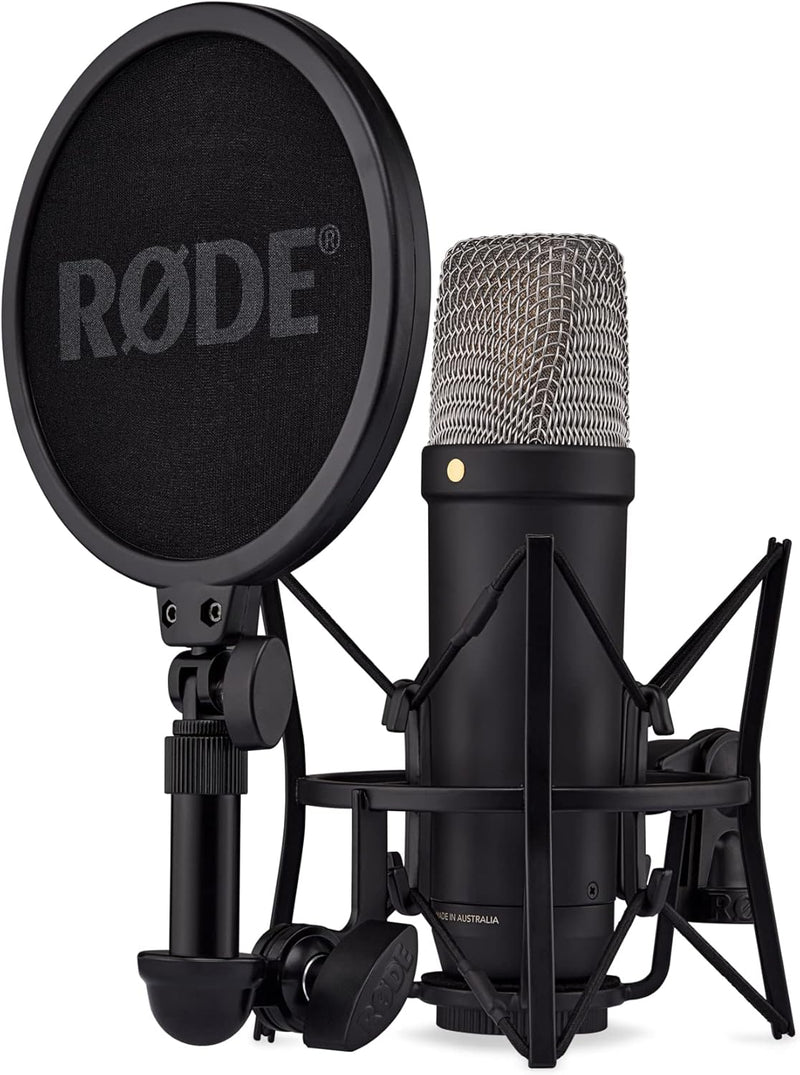


Rode NT1 5th Gen — Editorial Review
The Rode NT1 5th Gen modernizes a home-studio legend by adding dual XLR and USB-C connectivity and 32-bit float recording to the famously quiet NT1 capsule. It's pitched as one mic that works for both classic studio chains and plug-and-play USB setups.
Featured Video Review

Famously quiet, now dual-connect
Sound On Sound and MusicRadar highlight its remarkably low 4.5dBA self-noise and a Dual Connect base that accepts either an XLR or a USB-C cable, with 32-bit float over USB to make clipping a non-issue. The warm, smooth NT1 voicing with a gentle high-end lift carries over, and Rode bundles a shock mount, pop filter, and cables. In Podcastage's review and test — featured above — it's compared against AT2020, U87, and other studio staples.
Honest cons
- No headphone jack. The most-cited drawback — there's no onboard monitoring in USB mode.
- Not phone/tablet compatible. Unlike many USB mics, it won't work with mobile devices.
- USB quirks. Some users hit Windows 11 recognition issues, and USB mode doesn't support 44.1kHz.
- Sensitive condenser. Like any condenser, it picks up room noise and needs decent acoustics.
Where this microphone fits
- Home-studio vocalists and podcasters who want pristine, ultra-low-noise recordings.
- Hybrid users who want one mic that runs USB now and XLR later as they grow.
- Creators valuing 32-bit float to avoid blown takes from gain mistakes.
- Not mobile-device recordists, those who need onboard headphone monitoring, or untreated-room users wanting a forgiving dynamic.
Sources & Citations
- Sound On Sound, "Rode NT1 5th Gen," soundonsound.com (accessed 2026-05-26)
- MusicRadar, "Rode Microphones NT1 5th gen review," musicradar.com (accessed 2026-05-26)
Last verified: 2026-05-26


