



Rode
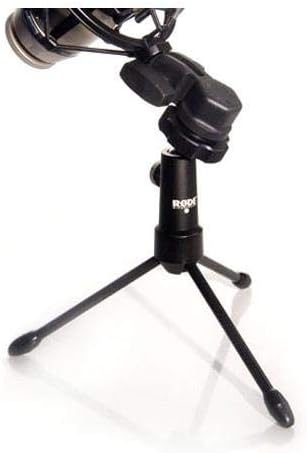
Rode TRIPOD Mini Microphone Tripod Stand
195 x 175
A stable, low-profile desktop platform that keeps lightweight condenser and dynamic mics positioned precisely without stand interference in the signal chain.
$24.99*
Check availability
*Price sourced from Amazon.com. Last updated:Aug 28, 2026.Price and availability are subject to change — details.
Affiliate Disclosure: As an Amazon Associate, Studio Supplies earns from qualifying purchases made through links on this page, at no additional cost to you. This helps support our editorial team.
Notice a mistake? Let Us Know
Overview
Key Features
Collapsible mini tripod for lightweight microphones
Provides 360 degree rotation and a wide angle of vertical adjustment
Weight: 185gm; Dimensions: 195 x 175 x 175mm
Specifications
Brand
Rode
Model
TRIPOD
Mount Thread
1/4"
Rotation
360°
Vertical Adjustment
Wide angle tilt
Weight
185g (6.5 oz)
Dimensions (unfolded)
195 x 175 x 175mm
Color
Black
Design
Collapsible legs
Frequently Asked Questions
What microphone thread does the Rode Tripod accept, and will it fit my condenser or dynamic mic directly?
The Tripod accepts a standard 1/4" thread. Most Rode microphones and many lightweight condensers use 3/8" threads, so a 3/8" to 1/4" thread adapter — commonly included with microphones or available separately — is typically needed. Confirm your mic's mounting thread before assuming a direct fit.
How much vertical angle adjustment does this stand provide, and will it hold a position under load?
The stand offers a wide range of vertical tilt adjustment. At the weight limits it's designed for — lightweight microphones — it holds position reliably. Heavier mics (over roughly 500g) may cause the joint to drift over time; this stand is built for compact mics, not large-diaphragm studio condensers.
Can the Rode Tripod be used on an uneven surface, or does it require a perfectly flat desk?
The three-leg design self-levels on minor surface irregularities, but the legs do not adjust in length. On significantly uneven surfaces — textured studio foam, outdoor terrain — stability is reduced. It performs best on flat desks, tabletops, and broadcast surfaces.
Does the 360-degree rotation adjust smoothly enough for live positioning adjustments during a session?
The rotation is continuous and smooth, useful for dialing in the horizontal sweet spot before a take. It is not designed for live rotation during recording — adjust between takes to avoid handling noise transferring through the stand to the microphone.
What is the maximum microphone weight this tripod can support without compromising stability?
No formal maximum weight is published, but the stand is designed for lightweight microphones. Its 185g self-weight and compact 195 x 175 x 175mm footprint indicate it is optimized for small-diaphragm condensers, compact dynamic mics, and boundary-style microphones — not large-format studio mics that exceed 300–400g.
Related Products


