



Rode
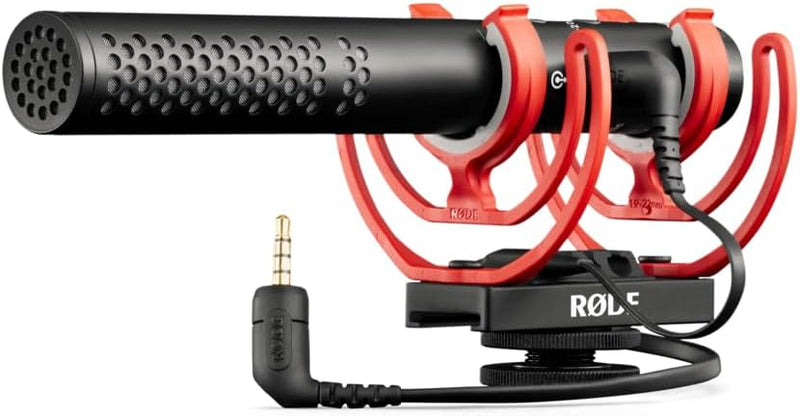
Rode VideoMic NTG On-Camera Shotgun Microphone Black
Broadcast-Quality Audio in a Compact On-Camera MicrophoneThe Rode VideoMic NTG is a feature-rich shotgun microphone engineered for superior on-camera audio recording. Boasting the same revolutionary acoustic design as the NTG5, this microphone delivers unmatched transparency, a natural sound, and...
$239.40*
View on Amazon
✓ In Stock on Amazon.com
*Price sourced from Amazon.com. Last updated:Sep 05, 2026.Price and availability are subject to change — details.
Affiliate Disclosure: As an Amazon Associate, Studio Supplies earns from qualifying purchases made through links on this page, at no additional cost to you. This helps support our editorial team.
Notice a mistake? Let Us Know
Overview
Broadcast-Quality Audio in a Compact On-Camera Microphone
The Rode VideoMic NTG is a feature-rich shotgun microphone engineered for superior on-camera audio recording. Boasting the same revolutionary acoustic design as the NTG5, this microphone delivers unmatched transparency, a natural sound, and a highly directional supercardioid polar pattern.
Beyond its exceptional sound quality, the VideoMic NTG offers a range of tools for any recording scenario, including digital switching for high-pass filter, pad, high frequency boost, and safety channel. Its auto-sensing 3.5mm output seamlessly adapts to camera or mobile devices, and it doubles as a fully-featured USB microphone for use with computers, tablets, and smartphones.
- Acoustic Design: Revolutionary acoustic design for unmatched transparency
- Polar Pattern: Supercardioid
- Frequency Response: 20Hz – 20kHz
- Output: Auto-sensing 3.5mm, USB-C
- Digital Switching: High-pass filter, -20dB pad, high frequency boost, safety channel
- Gain Control: Infinitely variable
- Self-Noise: Very low
- Connectivity: 3.5mm auto-sensing USB-C
- Material: Aerospace-grade aluminium
Key Features
Broadcast-grade, feature-packed shotgun microphone optimised for on-camera use. featuring the same revolutionary acoustic design as the award-winning NTG5 broadcast shotgun microphone, which delivers unmatched transparency and a natural, uncoloured sound
Extremely flexible, with an array of tools and features to help you take on any recording situation. Digital switching gives you access to a high-pass filter, -20dB pad, high frequency boost, and safety channel, plus there is a unique infinitely variable gain control that allows you to precisely tailor the output to suit your recorder or camera
Auto-sensing 3.5mm output detects what device you are connected to (camera or mobile) and switches to accommodate – no more messing around with adaptor cables
Also works as a fully-featured USB microphone that can be plugged into a computer, tablet, or smartphone, with the 3.5mm jack doubling as a headphone output for seamless monitoring of audio while using the USB function
Also Interfaces digitally into smartphones, including Android and iOS devices for amazing audio when filming with a mobile (note an SC15 Lightning Accessory Cable is required for use with iOS devices)
Specifications
Microphone Type
On-Camera Shotgun Microphone
Model Name
VideoMic NTG
Color
Black
Acoustic Design Origin
NTG5 broadcast shotgun microphone
Output Control
Infinitely variable gain control
Output Connector
Auto-sensing 3.5mm
Digital Switch Features
High-pass filter, -20dB pad, High frequency boost, Safety channel
USB Microphone Functionality
Yes (compatible with computer, tablet, smartphone)
Headphone Output
Yes (via 3.5mm jack during USB use)
Smartphone Digital Interface
Yes (Android, iOS - SC15 required for iOS)
Frequently Asked Questions
What makes the Rode VideoMic NTG suitable for on-camera use?
The Rode VideoMic NTG is optimized for on-camera use, featuring a broadcast-grade acoustic design that delivers transparent and natural sound, ideal for capturing high-quality audio directly from your camera.
Can I connect the VideoMic NTG directly to my smartphone?
Yes, the VideoMic NTG can interface digitally into smartphones, including Android and iOS devices, though an SC15 Lightning Accessory Cable is required for use with iOS devices.
Does this microphone offer any control over its sound characteristics?
Absolutely. It features flexible digital switching that provides access to a high-pass filter, a -20dB pad, a high-frequency boost, and a safety channel, allowing you to tailor the sound.
How does the auto-sensing 3.5mm output work?
The auto-sensing 3.5mm output automatically detects whether you are connected to a camera or a mobile device and switches to accommodate, eliminating the need for various adapter cables.
Is it possible to monitor audio while using the VideoMic NTG as a USB microphone?
Yes, when used as a USB microphone, the 3.5mm jack doubles as a headphone output, allowing for seamless monitoring of your audio.
What is the purpose of the infinitely variable gain control?
The infinitely variable gain control allows you to precisely tailor the microphone's output level to perfectly match the input requirements of your recorder or camera.
Related Products


