



Rokinon
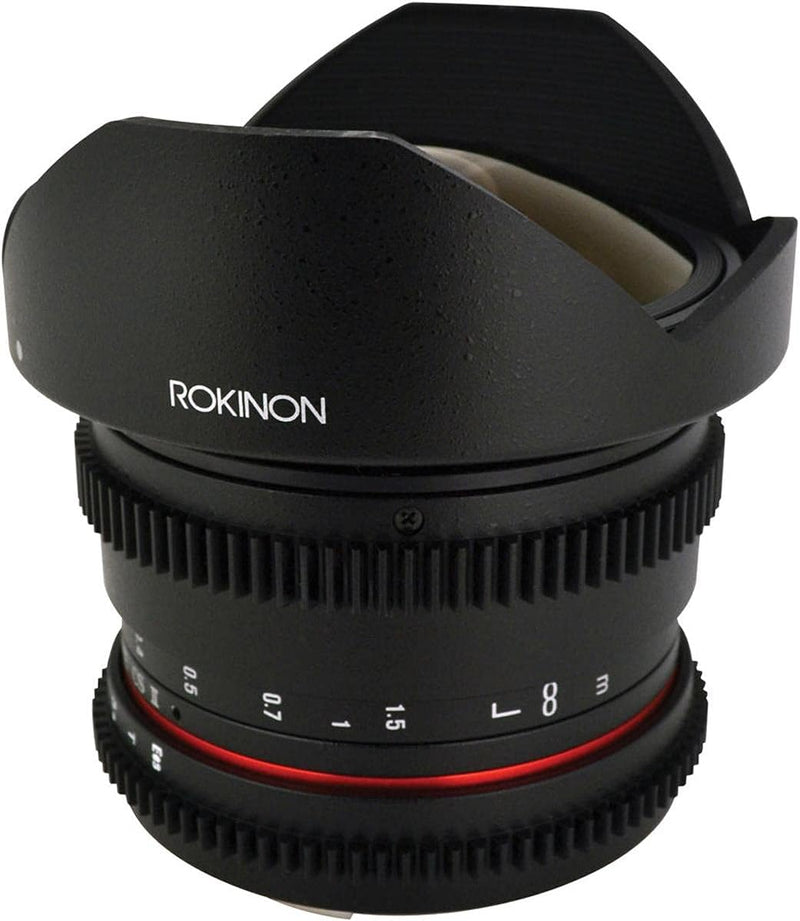
Rokinon RKHD8MV-C HD 8mm T3.8 Fisheye Lens Canon - Cine Lens
See the world in a full 180-degree arc — the Rokinon 8mm T3.8 Cine Fisheye opens up immersive perspectives that no standard wide-angle can touch.
$274.00*
View on Amazon
✓ In Stock on Amazon.com
*Price sourced from Amazon.com. Last updated:Aug 29, 2026.Price and availability are subject to change — details.
Affiliate Disclosure: As an Amazon Associate, Studio Supplies earns from qualifying purchases made through links on this page, at no additional cost to you. This helps support our editorial team.
Notice a mistake? Let Us Know
Overview
Key Features
8mm ultra wide cine fisheye lens with 180 degrees angle of view
feature declicked aperture for easy video shooting
constructed of 10 elements for easy video shooting
Features HD Optics and removable hood for clearer pictures optimal for shooting on full frame cameras
Seamless aperture shifting from t3.8-t22
Lens not Zoomable
Specifications
Model
RKHD8MV-C
Focal Length
8mm
Maximum Aperture
T3.8
Minimum Aperture
T22
Aperture Type
De-clicked (seamless)
Angle of View
180 degrees
Optical Construction
10 elements
Optics
HD optical glass
Focus Type
Manual focus only
Zoom
Fixed focal length (not zoomable)
Hood
Removable
Sensor Compatibility
APS-C and Full-Frame
Mount
Canon EF
Frequently Asked Questions
Is this lens usable on full-frame Canon bodies, and how does the image circle behave on both sensor formats?
The Rokinon 8mm T3.8 is compatible with both APS-C and full-frame Canon EF mount cameras. On APS-C sensors it delivers the classic fisheye circular-to-edge distortion. On full-frame bodies the 180-degree angle of view produces a more pronounced circular fisheye effect with visible dark corners — factor this into your creative decision if you're shooting full-frame.
What does "de-clicked aperture" mean for video work, and why does it matter on this lens?
A de-clicked aperture means the iris blade ring rotates smoothly and silently without the tactile detents (clicks) that photo lenses use to step between f-stop values. This lets you pull aperture during a shot — reducing or increasing exposure on the fly — without the audible click being captured by on-camera or nearby microphones. It's essential for clean run-and-gun and documentary video work.
Does this lens autofocus, and how does manual focus feel in practice?
This is a manual focus only lens — there is no autofocus motor. The focus ring operates smoothly and the 8mm focal length's inherent depth of field at T3.8 means a large portion of the frame is in focus at once, reducing the precision required for follow focus work. For video work, manual focus is the norm on cine lenses and the broad depth of field makes this one of the easier lenses to keep sharp.
How does the removable lens hood affect shooting in bright conditions or tight spaces?
The removable hood is useful in most outdoor shooting scenarios to reduce flare and protect the front element. In very tight spaces — interiors, vehicle interiors, architectural work — removing it gives you a few extra centimeters of clearance and can allow the lens to get closer to subjects or walls without the hood entering the frame.
What's the minimum focus distance, and can this lens be used for environmental portraits or must subjects be at distance?
The 8mm fisheye's geometry is most dramatic when subjects are close to the lens — bringing a face or object within arm's reach exaggerates the perspective distortion in a way that can make for striking, character-driven environmental portraits. The minimum focus distance is close enough for intimate subject work; shooting exclusively at distance underuses the lens's creative strengths.
Related Products


