



Roland
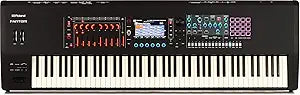
Roland FANTOM-8 Music Workstation 88-key Synthesizer
The Roland FANTOM-8 delivers 88 keys of weighted, aftertouch-sensitive expression with a hybrid sound engine built for serious studio production and live performance.
$3,599.99*
Check availability
*Price sourced from Amazon.com. Last updated:Aug 28, 2026.Price and availability are subject to change — details.
Affiliate Disclosure: As an Amazon Associate, Studio Supplies earns from qualifying purchases made through links on this page, at no additional cost to you. This helps support our editorial team.
Notice a mistake? Let Us Know
Overview
Key Features
Fantom Series Limited Edition T-Shirt with Product Registration
Acclaimed 88-note weighted keyboard with aftertouch
Seamless workflow with no confusing modes
Expandable sound engine delivers authentic electronic and acoustic sounds
Fresh hybrid sounds combining modern PCM, virtual analog, and a routable analog filter
V-piano technology for stunning realism and expression
Specifications
Keys
88-note weighted with aftertouch
Sound Engine
Hybrid PCM, Virtual Analog, Analog Filter
Technology
V-Piano
Analog Filter
Routable hardware analog filter
Model
FANTOM-8
Brand
Roland
Frequently Asked Questions
Does the FANTOM-8 require external processing, or is the sound engine self-contained?
The sound engine is fully self-contained. The FANTOM-8 integrates PCM, virtual analog synthesis, and a routable analog filter in a single instrument — you can track directly into your DAW via USB audio without routing through an external interface for the synth engine itself.
How does the analog filter integrate with the digital sound engine?
The analog filter is a hardware circuit that sits in the signal path and can be routed post-oscillator. This means you get genuine analog coloration — harmonic saturation and the soft clip behavior of real circuitry — applied to PCM or virtual analog sources. It's not a plugin simulation.
Is the 88-key weighted action suitable for piano-focused recording sessions?
Yes. The V-Piano technology and weighted keybed with aftertouch make it a credible studio piano for tracking. Aftertouch enables expressive dynamics and modulation that MIDI velocity alone can't capture — important for sustained pads, strings, and solo lines.
How does the FANTOM-8 handle workflow in a live or session context?
Roland designed the FANTOM series around a modeless workflow — you can adjust sounds, scenes, and sequencer parameters without navigating nested menus. In a session or live environment, this means fewer interruptions when you need to dial in a patch on the fly.
Can the FANTOM-8 be expanded beyond its factory sounds?
Yes, the sound engine is expandable. Roland supports additional sound libraries and plug-in expansion, allowing you to grow the palette beyond the factory content — useful for producers who need specialized acoustic instruments or niche synthesis types.
Related Products


