

Roland
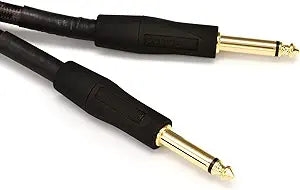
Roland RIC-G20 Gold Series 20-Foot Instrument Cable
Low-capacitance OFC core and 24K gold contacts keep your instrument's full-frequency transient response intact across 20 feet of signal path.
$51.99*$54.43Save 4%
View on Amazon
✓ In Stock on Amazon.com
*Price sourced from Amazon.com. Last updated:Oct 21, 2026.Price and availability are subject to change — details.
Affiliate Disclosure: As an Amazon Associate, Studio Supplies earns from qualifying purchases made through links on this page, at no additional cost to you. This helps support our editorial team.
Notice a mistake? Let Us Know
Overview
Key Features
Straight 1/4-inch connectors, 20 ft. (6m) length. Also available in 3 ft. (1m) (RIC-G5), 5 ft. (1.5m) (RIC-G20), 10 ft. (3m) (RIC-G10), 15 ft. (4.5m) (RIC-G15), and 25 ft. (7.5m) (RIC-G25) lengths.
Professional-grade 1/4-inch connectors with 24K gold-plated contacts with high-density spiral copper shielding
High-density spiral copper shielding
Low-capacitance design ensures full frequency reproduction and maximum dynamic response
Woven outer jacket provides durability and flexibility
Lifetime guarantee
Specifications
Length
20 feet (6 meters)
Connector Type
Straight 1/4-inch / Straight 1/4-inch
Contact Material
24K Gold-Plated
Core Wire
Studio-quality oxygen-free copper (OFC)
Shielding
High-density spiral copper
Outer Jacket
Woven
Design
Low-capacitance
Warranty
Lifetime guarantee
Frequently Asked Questions
What does the low-capacitance design of the RIC-G20 actually mean for tone?
Capacitance in an instrument cable acts as a passive low-pass filter — the higher the capacitance per foot, the more high-frequency content bleeds to ground before it reaches your input. The RIC-G20's low-capacitance construction preserves the top-end air and pick attack of passive pickups, particularly noticeable with single-coil guitars that depend on that extended high-frequency response for their characteristic brightness.
Does the gold plating on the connectors provide a measurable benefit over standard nickel contacts?
Yes, in the long term. Gold resists oxidation better than nickel or silver, maintaining a lower-resistance connection at the contact point over years of use. The practical benefit is consistent signal transfer without the intermittent crackle that develops in corroded nickel contacts — especially relevant in humid touring environments.
Is the woven outer jacket durable enough for live stage use?
The woven jacket is significantly more abrasion-resistant than standard PVC sheaths and handles repeated coiling, foot traffic, and rack mounting better than rubber-jacketed cables. It remains flexible in cold conditions where rubber jackets stiffen, which is a relevant consideration for outdoor or cold-venue performances.
How does the RIC-G20 hold up to repeated connector stress — stage stumbles, tight pedalboard angles?
The straight 1/4-inch connectors are professional-grade and built for mechanical durability, but straight connectors are inherently more vulnerable to right-angle stress than angled alternatives. If your pedalboard or amp input is in a tight space, the straight-to-straight configuration may experience more lateral leverage than a right-angle termination would.
What is the lifetime guarantee terms for the RIC-G20?
Roland backs the Gold Series cables with a lifetime guarantee. This covers manufacturing defects in the cable, connector, and shielding — not physical damage from abuse. Contact Roland support directly for warranty service.
Related Products


