



Roland
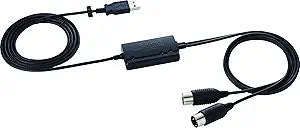
Roland UM-ONE USB MIDI Interface FPT Processing
Roland UM-ONE delivers plug-and-play USB MIDI connectivity with low-latency FPT processing.
$99.99*
Check availability
*Price sourced from Amazon.com. Last updated:Aug 27, 2026.Price and availability are subject to change — details.
Affiliate Disclosure: As an Amazon Associate, Studio Supplies earns from qualifying purchases made through links on this page, at no additional cost to you. This helps support our editorial team.
Notice a mistake? Let Us Know
Overview
Key Features
1-in/1-out MIDI interface with high-performance FPT processing
Data indicators for both MIDI input and output. Conveniently integrated USB and MIDI cables
USB bus powered
Specifications
Brand
Roland
Model
UM-ONE
MIDI Interface
1-in / 1-out
Processing
High-performance FPT
Power
USB bus powered
Compatibility
Mac and PC
Indicators
MIDI input and output data LEDs
Cable Design
Integrated USB and MIDI cables
Frequently Asked Questions
Does the UM-ONE require an external power supply?
No, it is USB bus powered, drawing all the power it needs directly from your computer's USB port.
Does the Roland UM-ONE require an external power supply?
No, it is USB bus powered, drawing all the power it needs directly from your computer's USB port.
How many MIDI devices can I connect at once with the UM-ONE?
It supports one MIDI input and one MIDI output, so you can connect a single MIDI device (such as a keyboard or sound module) to your computer at a time.
Are the USB and MIDI cables permanently attached to the unit?
Yes, both the USB and MIDI cables are integrated into the interface, so there are no separate cables to purchase or lose.
What is FPT processing?
FPT (Fast Processing Technology) is Roland's proprietary engine that ensures MIDI data is transmitted with minimal latency and high accuracy, reducing timing issues during recording and playback.
Is the UM-ONE compatible with both Mac and PC?
Yes, it works with both Mac and PC systems.
What is FPT processing and why does it matter?
FPT (Fast Processing Technology) is Roland's low-latency MIDI data handling, which minimizes timing delays between your MIDI controller and your software for more responsive performance.
Is the UM-ONE compatible with both Mac and PC?
Yes, it works with both Mac and PC systems.
How can I tell if MIDI data is being sent or received?
The UM-ONE has built-in LED data indicators for both MIDI input and output, giving you visual confirmation of signal activity.
Do I need separate MIDI cables to use this interface?
No, the USB and MIDI cables are integrated directly into the unit, so no additional cables are required.
Related Products


