



Samson
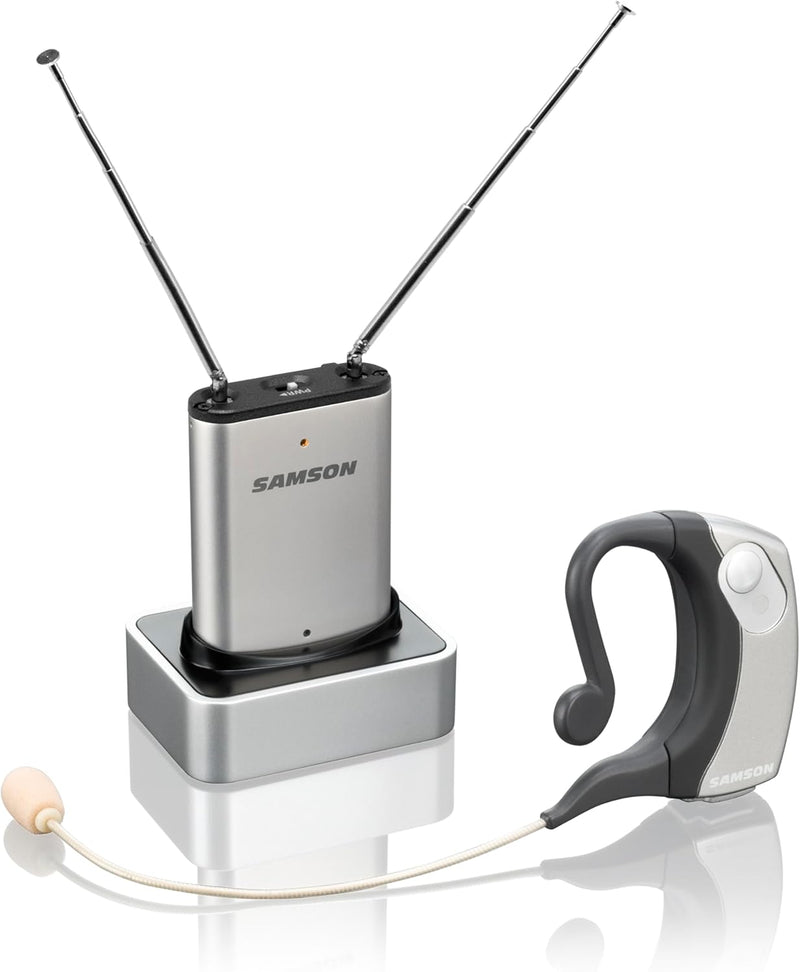
Samson SWAM2SES-K2 AirLine Micro Wireless Earset System
A self-contained rechargeable wireless earset system with 300-foot range and auto mute, engineered for clean RF-free audio in presentations, live performance, and fitness instruction.
$379.99*
View on Amazon
✓ In Stock on Amazon.com
*Price sourced from Amazon.com. Last updated:Oct 21, 2026.Price and availability are subject to change — details.
Affiliate Disclosure: As an Amazon Associate, Studio Supplies earns from qualifying purchases made through links on this page, at no additional cost to you. This helps support our editorial team.
Notice a mistake? Let Us Know
Overview
Key Features
Includes AH2 Micro Ear set Transmitter, AR2 Micro Receiver, AR2D Receiver Dock, USB Y-Power Cable, 1/8" to 1/4" Audio Cable, 3 Windscreens and Carry Case
Tone key and auto mute prevents unwanted noise when transmitter is off or out of range
AH2 Ear set transmitter built-in rechargeable battery provides up to 6 hours of operation
AH2 Ear set transmitter features one button operation for power, mute and volume
AR2 receiver Built-in rechargeable battery provides up to 6 hours of operation
AR2 receiver includes 1/8" (3. 5mm) mic/line level output
300' Operating range (line-of-sight)
AR2 dock provides secure base for AR2 receiver during operation and charging
Specifications
Transmitter
AH2 Micro Earset Transmitter
Receiver
AR2 Micro Receiver
Operating Range
300 feet (line-of-sight)
Battery Life
Up to 6 hours (transmitter and receiver)
Receiver Output
1/8" (3.5mm) mic/line level
Included Accessories
AR2D Receiver Dock, USB Y-Power Cable, 1/8" to 1/4" Audio Cable, 3 Windscreens, Carry Case
Frequently Asked Questions
What output level does the AR2 receiver provide, and how does it connect to a mixer or PA?
The AR2 outputs a 1/8" (3.5mm) mic/line level signal. The included 1/8" to 1/4" adapter cable bridges it to a standard PA mixer input or powered speaker aux input. For XLR inputs on a professional mixing console, you will need a 3.5mm-to-XLR adapter or a DI box, which is not included.
How does the tone key and auto mute function affect signal quality when the transmitter is powered off or out of range?
The tone key system detects a pilot tone transmitted by the AH2; when the transmitter is switched off or moves out of range and the tone drops, the AR2 automatically mutes the output. This eliminates the loud RF noise burst that unprotected wireless systems produce when the transmitter loses contact — the output goes clean-silent instead.
Can the transmitter and receiver recharge simultaneously, and how long does charging take?
Both the AH2 transmitter and the AR2 receiver feature built-in rechargeable batteries. The AR2 receiver charges in its dock, and the AH2 charges separately. Exact recharge time is not specified in the product documentation, but both units provide up to 6 hours of continuous operation per charge — plan for overnight charging between back-to-back full-day events.
How is volume adjusted on this system?
Volume control is handled via the single button on the AH2 transmitter — the same button manages power, mute, and volume cycling. There is no gain control on the AR2 receiver itself, so output level adjustments at the receiver end must be managed at the downstream mixer or amplifier.
What is the operating frequency and can it be changed to avoid RF interference?
The AirLine Micro operates on a fixed frequency in the 2.4 GHz ISM band. There is no user-selectable frequency hopping or manual channel switching. In RF-congested environments with competing 2.4 GHz traffic, interference is possible and cannot be mitigated by retuning this system.
Related Products


