

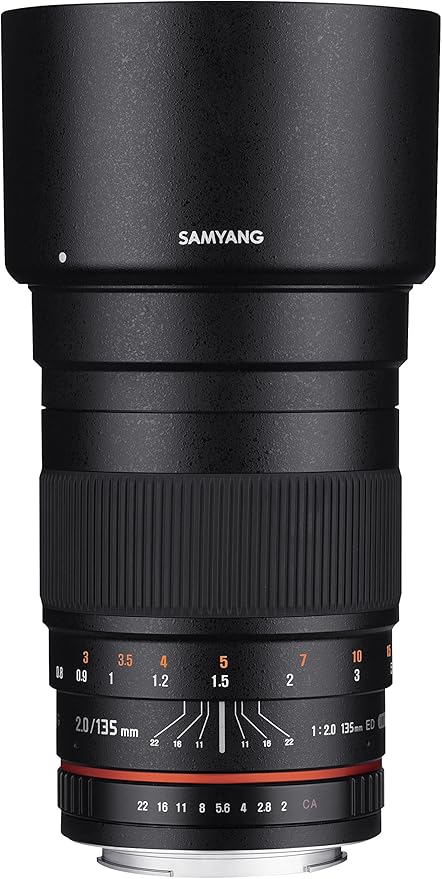
Samyang
Samyang SY135M-C 135mm f/2.0 Telephoto Lens for Canon EF
Capture Stunning Detail with the Samyang 135mm Telephoto Lens The Samyang 135mm f/2.0 ED UMC Telephoto Lens is designed for exceptional image quality and versatility. With its fast aperture, ED glass elements, and UMC anti-reflective coating, this lens delivers sharp, clear images with beautiful ...
$599.00*
View on Amazon
✓ In Stock on Amazon.com
*Price sourced from Amazon.com. Last updated:Aug 29, 2026.Price and availability are subject to change — details.
Affiliate Disclosure: As an Amazon Associate, Studio Supplies earns from qualifying purchases made through links on this page, at no additional cost to you. This helps support our editorial team.
Notice a mistake? Let Us Know
Overview
Capture Stunning Detail with the Samyang 135mm Telephoto Lens
The Samyang 135mm f/2.0 ED UMC Telephoto Lens is designed for exceptional image quality and versatility. With its fast aperture, ED glass elements, and UMC anti-reflective coating, this lens delivers sharp, clear images with beautiful bokeh.
Specifications:
- Brand: Samyang
- Model: SY135M-C
- Focal Length: 135mm
- Aperture: f/2.0
- Optical Design: ED (Extra-low Dispersion) glass elements
- Coating: UMC (Ultra Multi-Coating)
- Diaphragm Blades: 9 (circular)
- Minimum Focus Distance: 2.6 feet
- Mount: Canon EF
- Compatibility: Canon EF Digital SLR Cameras
Specifications
Focal Length
135mm
Maximum Aperture
f/2.0
Lens Type
Telephoto Lens
Mount Type
Canon EF
Frequently Asked Questions
What is the focal length of the Samyang SY135M-C lens?
The Samyang SY135M-C is a 135mm telephoto lens, making it suitable for subjects like portraits, where subject isolation is desired.
What is the maximum aperture of this lens?
This lens features a bright maximum aperture of f/2.0, which is beneficial for shooting in low light and achieving a shallow depth of field.
Which camera mounts is this Samyang lens compatible with?
The Samyang SY135M-C 135mm f/2.0 lens is designed for Canon EF mount cameras.
Does this lens have autofocus?
The product description does not specify autofocus capabilities, indicating it is likely a manual focus lens.
Is this lens suitable for low-light photography?
Yes, with its f/2.0 aperture, the lens allows a significant amount of light to reach the sensor, making it well-suited for low-light conditions.
Related Products


