



Sennheiser
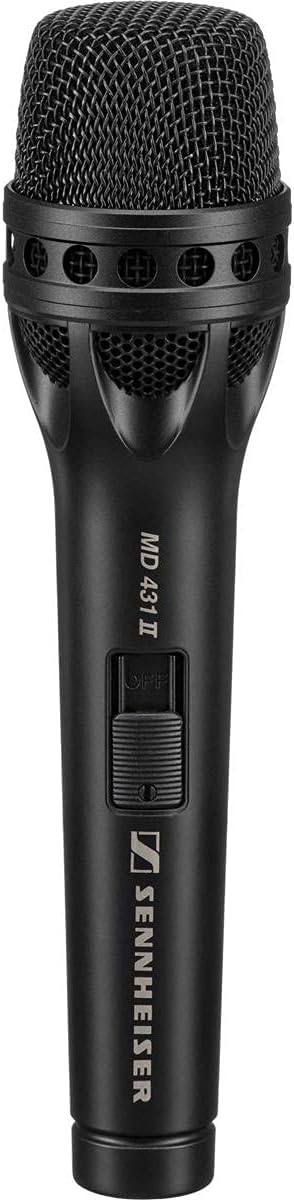
Sennheiser MD431-II Super-Cardioid Dynamic Microphone
Built for loud stages and tight monitors, the MD431-II delivers feedback-resistant super-cardioid clarity that survives the chaos of live vocal performance.
$549.00*
View on Amazon
✓ In Stock on Amazon.com
*Price sourced from Amazon.com. Last updated:Oct 20, 2026.Price and availability are subject to change — details.
Affiliate Disclosure: As an Amazon Associate, Studio Supplies earns from qualifying purchases made through links on this page, at no additional cost to you. This helps support our editorial team.
Notice a mistake? Let Us Know
Overview
Key Features
Exceptionally good feedback rejection
Shock mounted capsule provides very good rejection of handling noise
Hum compensating coil
Integral pop filter
On/off switch (reed switch) can be locked in the ON position if required
Specifications
Microphone Type
Dynamic
Polar Pattern
Super-Cardioid
Feedback Rejection
Exceptionally good
Handling Noise Rejection
Very good (shock mounted capsule)
Hum Compensation
Yes (hum compensating coil)
Pop Filter
Integral
On/Off Switch
Yes (reed switch, lockable)
Frequently Asked Questions
How does the super-cardioid polar pattern affect gain before feedback on stage?
Super-cardioid patterns have a tighter acceptance angle than standard cardioids — roughly 115° vs 130° — which gives the MD431-II significantly more rejection of off-axis stage noise and monitor bleed. In practice, you can push the channel harder before the PA starts ringing.
Does the MD431-II require phantom power?
No. It's a dynamic microphone and draws no phantom power. You can plug it into any XLR preamp input without concern for phantom compatibility — including older analog consoles that don't carry 48V.
How does the shock-mounted capsule affect handling noise during a live performance?
The internal shock mount mechanically decouples the capsule from the body, so grip adjustments, cable tug, and stand vibration don't couple into the signal chain. You'll hear the difference most clearly in quiet passages — no low-frequency thud when the performer shifts grip mid-song.
What's the effective frequency range and how does it translate to vocal intelligibility?
The MD431-II runs 40Hz to 16kHz. The upper rolloff at 16kHz is deliberate — it keeps sibilance controlled in untreated live rooms without needing heavy de-essing at the console. The presence lift in the upper mids adds articulation to vocals in dense mixes.
Can the on/off switch be disabled for broadcast or theater use?
Yes. The reed switch can be locked in the ON position, which is standard practice for broadcast and theater applications where an accidental cut mid-performance would be unacceptable.
Related Products


