

Sennheiser
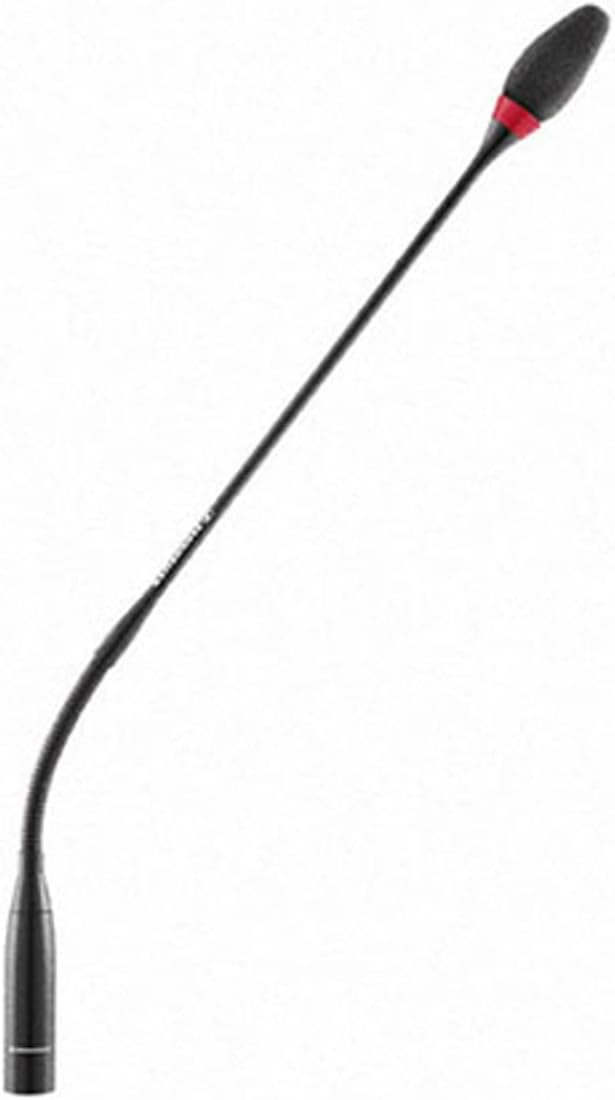
Sennheiser 504792 MEG 14-40-L Cardioid Gooseneck Microphone
Conference-room clarity meets broadcast-grade engineering: the Sennheiser MEG 14-40-L delivers a 58dB SNR cardioid pattern on a 40cm flexible gooseneck built for the spoken word.
$299.00*
Check availability
*Price sourced from Amazon.com. Last updated:Aug 28, 2026.Price and availability are subject to change — details.
Affiliate Disclosure: As an Amazon Associate, Studio Supplies earns from qualifying purchases made through links on this page, at no additional cost to you. This helps support our editorial team.
Notice a mistake? Let Us Know
Overview
Specifications
Microphone Type
Cardioid Gooseneck
Capsule
Sennheiser KE10
Gooseneck Length
16 inches (40 cm)
Connector
5-Pin XLR
Impedance
100 Ohm
Signal-to-Noise Ratio
58 dB
Maximum SPL
130 dB
Polar Pattern
Cardioid (Unidirectional)
Frequency Response
Up to 20 kHz
Feature
Integrated Status Light Ring
Frequently Asked Questions
What is the significance of the 5-pin XLR connector on the MEG 14-40-L compared to a standard 3-pin XLR?
The 5-pin XLR connector on the MEG 14-40-L carries both the audio signal and power/control signals for the integrated light ring. Standard balanced audio XLR is 3-pin (ground, hot, cold); the two additional pins handle the LED status indicator. This means you cannot plug the MEG 14-40-L directly into a standard XLR mic preamp input — it requires a Sennheiser-compatible base unit or boundary layer mount that supports the 5-pin termination and provides the appropriate power.
What does the cardioid polar pattern mean for rejection of room noise and table reflections in a conference setting?
A cardioid pattern accepts sound from the front while attenuating sound from the rear by approximately 20–25dB at on-axis. In a conference table setup, this means the MEG 14-40-L rejects sound from behind the microphone — audience noise from the other side of the table, projector fan noise, HVAC — while remaining sensitive to the speaker positioned in front of it. Compared to an omnidirectional boundary mic, the cardioid gooseneck gives the system operator tighter control over each talker's pickup zone.
What is the 58dB signal-to-noise ratio in practice, and is it sufficient for live presentation reinforcement?
58dB SNR means the MEG 14-40-L's self-noise floor sits approximately 58dB below its 130dB SPL maximum. For speech reinforcement in a conference room or lecture hall, where the primary concern is intelligibility rather than low-noise recording of quiet acoustic sources, 58dB SNR is fully adequate. For critical recording applications (voiceover, broadcast close-mic situations), a higher-SNR condenser capsule would be more appropriate.
Can the gooseneck be repositioned during a live event, or does repositioning cause handling noise?
The gooseneck is designed for pre-session positioning — you set it at the start and leave it. Repositioning the flexible gooseneck during live reinforcement will cause audible handling noise through the capsule. The MEG 14-40-L is intended to be aimed at the talker's mouth position during setup, not adjusted during a live address.
Does the integrated light ring indicate microphone status, and can it be controlled remotely?
The light ring provides visual status indication — on/off, mute status, or system-defined states — and is powered and controlled via the 5-pin XLR connection to the base unit. Control functionality depends on the Sennheiser base station or boundary mount the microphone is connected to, rather than being independently programmable at the microphone itself.
Related Products


