



Sennheiser
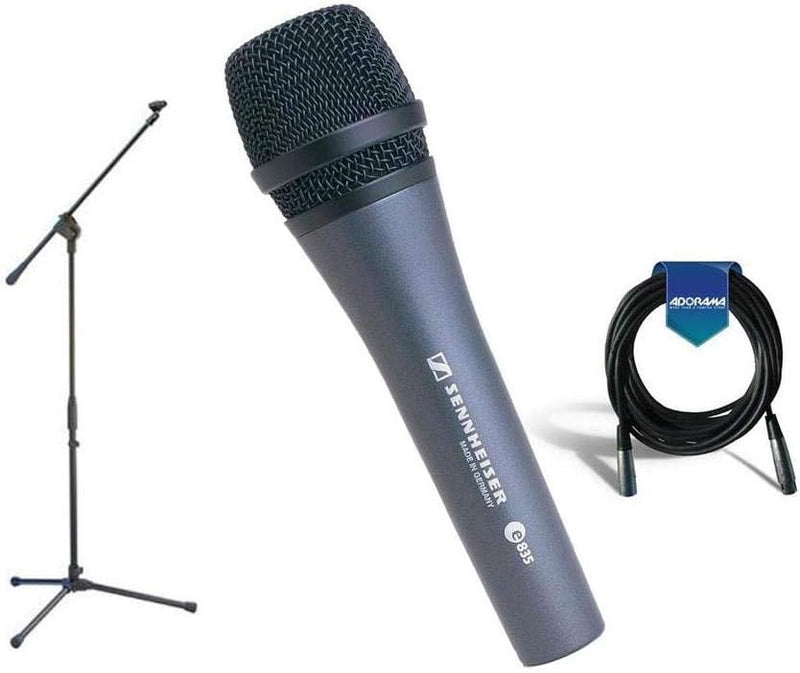
Sennheiser 798304230772 E 835 Dynamic Vocal Microphone Bundle
The Sennheiser e 835 delivers a punchy, feedback-resistant vocal signal on XLR with the road-ready durability that keeps it on touring riders for decades.
$129.95*
View on Amazon
✓ In Stock on Amazon.com
*Price sourced from Amazon.com. Last updated:Oct 21, 2026.Price and availability are subject to change — details.
Affiliate Disclosure: As an Amazon Associate, Studio Supplies earns from qualifying purchases made through links on this page, at no additional cost to you. This helps support our editorial team.
Notice a mistake? Let Us Know
Overview
Key Features
Consumer Alert: Most users do not need a license to operate this wireless microphone system. Nevertheless, operating this microphone system without a license is subject to certain restrictions: the system may not cause harmful interference; it must operate at a low power level (not in excess of 50 milliwatts); and it has no protection from interference received from any other device.
Specifications
Brand
Sennheiser
Model
E 835
Transducer Type
Dynamic
Polar Pattern
Unidirectional (Cardioid)
Frequency Response
40 Hz – 16 kHz
Connectivity
XLR
Phantom Power Required
No
Body Material
Metal
Color
Black
Included Accessories
Microphone stand, XLR cable, carrying pouch
Frequently Asked Questions
What gain do I need from my interface or console to drive the e 835 to a healthy signal level?
The e 835 is a passive dynamic microphone with a relatively efficient output for its class — a clean preamp with 50–60dB of gain available will drive it to a healthy operating level without reaching the noise floor of most modern interfaces. Unlike ribbon microphones or low-output dynamics such as the SM7B, it doesn't demand exceptional preamp headroom.
Does the e 835 require phantom power?
No. It is a passive dynamic transducer — phantom power does nothing to its signal and causes no damage if accidentally engaged. This makes it a safe choice in any live or studio signal chain regardless of console or interface phantom power settings.
How does the cardioid polar pattern behave during live vocal performance with monitors on stage?
The e 835's unidirectional cardioid pattern has consistently tight off-axis rejection, which contributes to its well-documented feedback resistance in live monitor environments. The rear rejection is cleanest on-axis to the capsule — pointing the mic accurately at the vocalist's mouth rather than at the source of potential feedback gives the polar pattern the geometry it needs to work as designed.
What is the effective frequency range and what does it mean for a vocalist?
The e 835 handles 40 Hz to 16 kHz. The low end captures chest resonance and warmth in baritone and bass voices without requiring a HPF to clear rumble, though most live applications benefit from engaging a high-pass filter at 80–100 Hz at the console. The upper range extends cleanly into the presence region, lending articulation to consonants and adding air to higher female voices without harshness.
What's included in the bundle and is everything needed for immediate use?
The bundle includes the e 835 microphone, a microphone stand, XLR cable, and a carrying pouch — everything required to connect to a mixer or interface and begin performing or recording immediately.
Related Products


