



Sennheiser
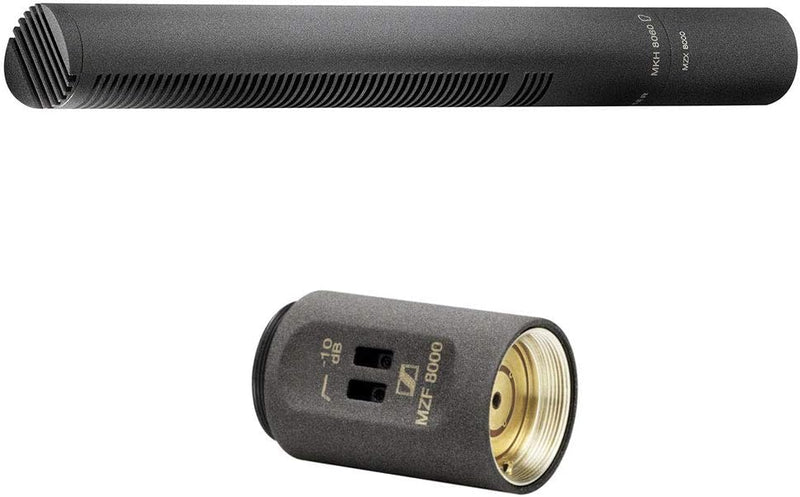
Sennheiser MKH 8060 Pro Audio Condenser Shotgun Mic
Condenser
Mix-ready sound from set to post — the Sennheiser MKH 8060's supercardioid lobe and RF circuit deliver location audio that holds up to professional scrutiny.
$1,598.00*
Check availability
*Price sourced from Amazon.com. Last updated:Aug 28, 2026.Price and availability are subject to change — details.
Affiliate Disclosure: As an Amazon Associate, Studio Supplies earns from qualifying purchases made through links on this page, at no additional cost to you. This helps support our editorial team.
Notice a mistake? Let Us Know
Overview
Key Features
supercardioid/lobe, condenser
Undistorted off-axis sound
High output signal
Rugged metal housing, Ideal for camera mounting due to compact design
Extremely weather-proof due to RF circuit
Specifications
Brand
Sennheiser
Model
MKH 8060
Microphone Type
Condenser Shotgun Mic
Polar Pattern
Supercardioid/Lobe
Housing Material
Metal
Weather Resistance
Extremely weather-proof (RF circuit)
Frequently Asked Questions
What is the MKH 8060's polar pattern, and what does supercardioid/lobe mean for on-set rejection of off-axis noise?
The MKH 8060 uses a supercardioid polar pattern with a rear lobe — tighter front sensitivity than a standard cardioid, which provides stronger rejection of sounds arriving from the sides. This is the preferred pattern for dialogue recording on set, where ambient noise comes from all directions but your subject is directly in front of the mic. The rear lobe is narrower than the front pickup, so you're rejecting most of the scene while capturing the talent.
How does the RF circuit design contribute to weather resistance, and why does that matter in location recording?
Sennheiser's RF (radio frequency) condenser circuit polarizes the capsule using an RF carrier signal rather than direct high-voltage electrostatic charging. This architecture is inherently less sensitive to moisture, humidity, and condensation — the leading cause of condenser microphone failure in outdoor and cross-climate location work. On humid film sets, in rain interiors, or during fast temperature changes from cold exteriors to warm interiors, the MKH 8060 remains stable where a conventional condenser would develop noise, cut out, or fail entirely.
What does "high output signal" mean for gain staging, and how does that affect noise performance with a field recorder?
The MKH 8060's high output sensitivity means you need less preamp gain from your field recorder or mixer to reach proper recording levels. Less gain applied means less amplified self-noise and preamp noise in the signal chain — the practical result is a quieter recording floor, which preserves dynamic range and gives you more headroom in post-production when applying noise reduction or normalization.
Can the MKH 8060 be mounted directly on a camera, or does it require a separate boom pole and recorder setup?
The MKH 8060 can physically mount on a camera using a standard shock mount in the hot shoe, and its compact design facilitates this. However, Sennheiser notes it is "ideal for camera mounting due to compact design." For professional location dialogue, a separate boom pole and dedicated recorder or mixer will yield significantly cleaner results than camera-mounted operation, where handling noise, camera motor vibration, and preamp quality all degrade the signal.
What cable connector and phantom power does the MKH 8060 require?
The MKH 8060 uses a standard XLR connector and requires phantom power for operation — confirm your interface, field recorder, or mixer provides standard 48V phantom power before use. The corded-electric power source designation confirms this is an active condenser that cannot operate passively.
Related Products


