

Shure
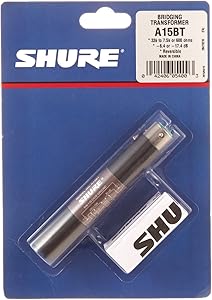
Shure A15BT: Bridging Transformer (Balanced/Unbalanced)
Bridge balanced and unbalanced audio lines cleanly with Shure's compact inline transformer.
View price on Amazon
Affiliate Disclosure: As an Amazon Associate, Studio Supplies earns from qualifying purchases made through links on this page, at no additional cost to you. This helps support our editorial team.
Notice a mistake? Let Us Know
Overview
Specifications
Brand
Shure
Model
A15BT
Type
Bridging Transformer
Compatibility
Balanced and Unbalanced Devices
Power
Passive (no power required)
Frequently Asked Questions
What does the Shure A15BT bridging transformer do?
It allows you to connect a balanced audio device to an unbalanced audio device, or vice versa, by matching signal levels and impedances between the two.
Where does the A15BT sit in the signal chain?
It connects inline between two audio cables or between a cable and a device input/output, acting as an adapter at the point where balanced and unbalanced signals need to meet.
Does the A15BT require external power?
No. As a passive transformer, it requires no batteries or phantom power to operate.
Can the A15BT help eliminate ground loop hum?
Yes. Because it uses transformer isolation, it can break ground loops that cause audible hum when connecting equipment with different ground references.
Related Products


