



Shure
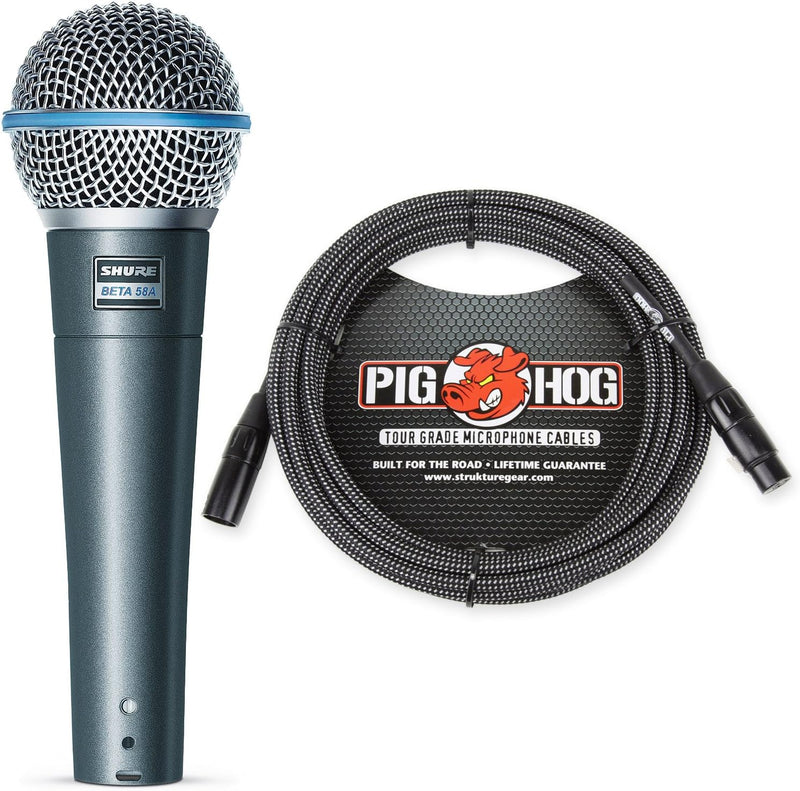
Shure BETA 58A Vocal Microphone XLR Cable Bundle
XLR
A supercardioid dynamic vocal mic built for focused, feedback-resistant live performance, bundled with a professional XLR cable.
$198.00*$199.00Save 0%
View on Amazon
✓ In Stock on Amazon.com
*Price sourced from Amazon.com. Last updated:Oct 21, 2026.Price and availability are subject to change — details.
Affiliate Disclosure: As an Amazon Associate, Studio Supplies earns from qualifying purchases made through links on this page, at no additional cost to you. This helps support our editorial team.
Notice a mistake? Let Us Know
Overview
Key Features
Super Cardioid Polar Pattern: The microphone has a super cardioid polar pattern that provides excellent rejection of sound from the rear and sides.
High Signal-to-Noise Ratio: With a signal-to-noise ratio of 78 dB, the microphone captures clear audio with minimal background noise.
Durable Metal Construction: Crafted from durable metal, the microphone is built to withstand the rigors of professional use.
Compact Design: The microphone has a compact design that makes it easy to use in a variety of settings.
XLR Connectivity: The microphone has XLR connectivity for seamless integration with professional audio equipment.
Specifications
Brand
Shure
Model
BETA 58A
Type
Dynamic
Polar Pattern
Supercardioid
Signal-to-Noise Ratio
78 dB
Construction
Durable Metal
Connector
XLR
Included Cable
Pig Hog Black & White Woven XLR Mic Cable
Frequently Asked Questions
What is the advantage of the BETA 58A's supercardioid pattern compared to a standard cardioid mic?
The supercardioid pattern has a tighter pickup area in front of the mic and stronger rejection of sound from the sides, which helps isolate your vocals and reduces bleed from nearby instruments and monitors on stage.
Can the Shure BETA 58A be used for studio vocal recording as well as live performance?
Yes, its clear midrange presence and high output make it effective in a studio setting, though its character is tailored for the projection and feedback resistance needed in live environments.
What XLR cable is included in this bundle?
This bundle includes a Pig Hog Black & White Woven Mic Cable, which is a durable, woven-jacket XLR cable designed for reliable signal transmission in both live and studio applications.
Does the BETA 58A require phantom power?
No, it is a dynamic microphone and does not require phantom power. It can be plugged directly into any mixer, audio interface, or preamp with a standard XLR input.
How does the BETA 58A handle plosives and handling noise?
It features a built-in pneumatic shockmount system that reduces handling noise, and its integrated windscreen helps minimize plosive sounds from close vocal use.
Related Products


