



Shure
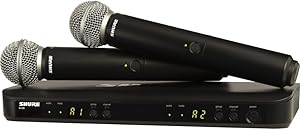
Shure BLX288/SM58-H9 UHF Wireless Dual Vocal Microphone System
Dual-channel wireless microphone system with two SM58 handheld transmitters and up to 300 ft of range.
$769.00*
View on Amazon
✓ In Stock on Amazon.com
*Price sourced from Amazon.com. Last updated:Aug 28, 2026.Price and availability are subject to change — details.
Affiliate Disclosure: As an Amazon Associate, Studio Supplies earns from qualifying purchases made through links on this page, at no additional cost to you. This helps support our editorial team.
Notice a mistake? Let Us Know
Overview
Key Features
H9 (512–542 MHz) UHF FREQUENCY BAND: Operates on the H9 (512–542 MHz) UHF frequency band for dependable wireless audio transmission in regions where this spectrum is authorized. Verify local compliance before ordering.
PROFESSIONAL RANGE & ALL-DAY POWER: Provides reliable audio transmission up to 300 ft (100 m) line-of-sight. Each BLX2 handheld transmitter operates up to 14 hours using AA batteries under typical conditions.
COMPLETE DUAL-CHANNEL AUDIO SETUP: Includes BLX88 dual-channel receiver, two BLX2 handheld transmitters with SM58 dynamic capsules, microphone clips, power supply, batteries, and user guide.
LEGENDARY SM58 SOUND: Each SM58 capsule features a cardioid pickup pattern engineered for clear vocals and speech while helping reduce background noise during live performances and presentations.
SHURE ENGINEERED RELIABILITY: Built with Shure’s trusted UHF wireless design and QuickScan frequency selection for fast setup. Supports up to 12 compatible systems per frequency band for expanded wireless setups.
Specifications
Brand
Shure
Model
BLX288/SM58-H9
System Type
UHF Wireless Dual Vocal
Microphone Capsule
SM58 (x2)
Receiver
BLX88 Dual-Channel
Transmitters
BLX2 Handheld (x2)
Operating Range
Up to 300 ft (100m)
Battery Life
Up to 14 hours (2x AA per transmitter)
Max Channels Per Band
12
Frequency Band
H9
Included
BLX88 receiver, power supply, 2x BLX2 transmitters, 2x mic clips, 4x AA batteries, user guide
Frequently Asked Questions
How many microphones come with the BLX288/SM58 system?
The system includes two BLX2 handheld wireless transmitters, each with an integrated SM58 vocal microphone capsule, along with a BLX88 dual-channel receiver.
What is the operating range of this wireless system?
The system operates at distances up to 300 feet (100 meters) line-of-sight from the receiver.
How long do the batteries last in the transmitters?
Each transmitter provides up to 14 hours of continuous use from two AA batteries.
Can I expand beyond two wireless microphones?
Yes, you can run up to 12 compatible BLX channels per frequency band, though each additional pair requires its own receiver.
Do I need to check frequency compatibility before purchasing?
Yes. The H9 frequency band designation is region-specific, so you should check the Shure Wireless Frequency Finder on Shure's website to confirm the band is approved for use in your area.
Related Products


